

Motorcycle Diagnostics: How to Identify Common Problems Early
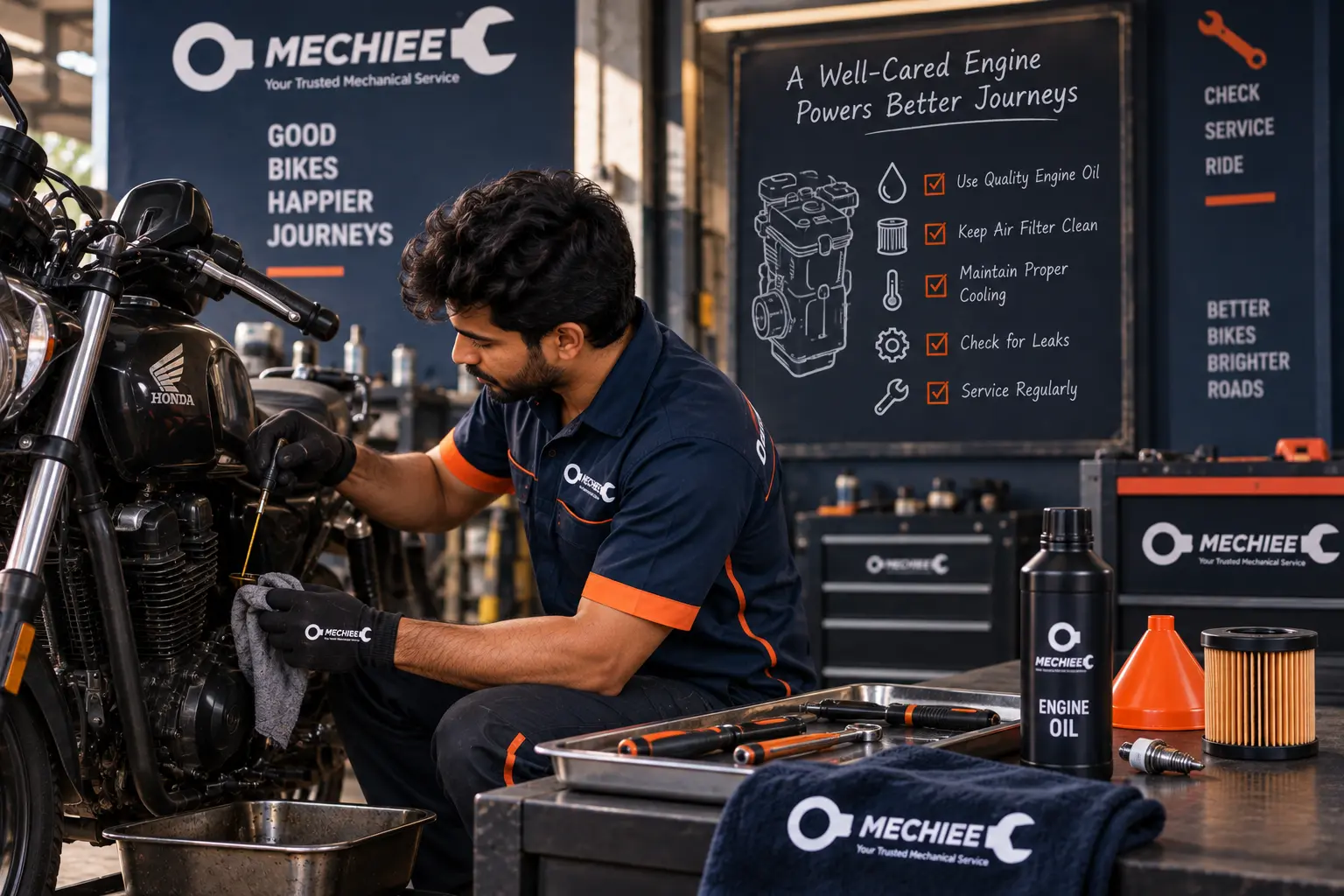
Motorcycles are surprisingly communicative when something's starting to go wrong — a new sound, a change in how it idles, a slight vibration that wasn't there before. Learning to notice and interpret these early signals is one of the most valuable skills a rider can develop, since it's almost always cheaper to fix a problem early than after it's been ignored.
Unusual Noises and What They Might Mean
- Knocking or pinging under acceleration — often related to fuel quality, ignition timing, or in some cases, engine wear. Worth investigating rather than dismissing as "normal" engine character.
- A high-pitched squeal when braking — usually the brake pad wear indicator doing exactly its job, signaling it's time for a check.
- Clicking or clunking from the chain area — can indicate a stiff link, worn sprocket teeth, or improper chain slack.
- A rattling sound at idle that goes away when revving — sometimes a loose heat shield or panel rather than an internal engine issue, but worth confirming rather than assuming.
Rough or Inconsistent Idling
An idle that surges up and down, or that's noticeably rougher than usual, often points to a fuel or air delivery issue — a dirty air filter, fouled spark plug, or in fuel-injected bikes, a sensor that needs attention. Occasional rough idling right after starting on a cold morning is usually normal; persistent rough idling once warmed up is not.
Warning Lights and Dashboard Indicators
Modern motorcycles with digital instrument clusters often display warning icons for engine issues, low fuel, or battery charging problems. Don't dismiss a warning light because the bike "seems to be running fine" — some issues (like a charging system fault) don't produce obvious symptoms until the battery is already significantly depleted.
Vibration Changes
Every bike has some baseline vibration character, and riders usually know their own bike's normal feel well. A new vibration — especially one that changes with speed rather than staying constant — can point to anything from an unbalanced wheel to a loosening component, and is worth having checked rather than tuning out.
Changes in Fuel Efficiency or Power Delivery
A gradual drop in mileage, hesitation under acceleration, or a bike that feels like it's "holding back" compared to how it normally performs are all diagnostic signals, even without an obvious noise or warning light attached to them.
Smell as a Diagnostic Tool
A burning smell can indicate anything from a dragging brake to an electrical issue; a strong fuel smell when the bike isn't being fueled can indicate a leak. Both are worth stopping to investigate immediately rather than continuing to ride and hoping it resolves itself.
Reading Exhaust Smoke Color
Exhaust smoke color, while not always conclusive on its own, is a useful clue. Thin white or blueish smoke can indicate oil being burned, possibly from worn piston rings or valve seals. Thick black smoke often points to a rich fuel mixture, sometimes from a clogged air filter or a fuel system issue. Occasional light smoke on a cold start that clears quickly is usually normal condensation burning off; smoke that persists once the engine is warm is worth investigating.
Using a Test Ride to Narrow Down a Problem
When something feels off but isn't obviously identifiable, a short, careful test ride paying close attention to specific conditions — does it happen only at certain speeds, only under acceleration, only when turning, only when braking — gives a mechanic much more to work with than a general "something feels wrong." Mentally noting these patterns, or even better, writing them down right after the ride while they're fresh, significantly speeds up an accurate diagnosis.
Modern Bikes and OBD-Style Diagnostics
Increasingly, motorcycles with fuel injection include onboard diagnostic systems that can flag sensor faults or system errors, sometimes visible as an error code on the dashboard and sometimes only accessible via a diagnostic tool at a service center. If your bike has this capability, a stored error code — even one that isn't currently triggering a warning light — can reveal an intermittent problem that would otherwise be very difficult to catch through observation alone.
Building Familiarity With Your Specific Bike
The single biggest advantage any rider has in diagnosing their own bike isn't technical knowledge — it's simple familiarity built from riding it regularly. A rider who rides the same bike daily develops an intuitive sense of what's normal, which makes deviations far easier to notice than they would be for someone unfamiliar with that specific machine. This is part of why a new owner sometimes struggles to tell whether a sound or feel is a genuine issue or just how that particular model behaves — familiarity takes a little time to build, and it's worth paying closer attention during the first few weeks with any new-to-you bike.
Frequently Asked Questions
Should I keep riding if I notice a new noise, as long as the bike still runs fine?
It depends on the noise, but as a general rule, if you can safely do so, it's better to get it checked soon rather than waiting, since many issues that start as a noise become more expensive the longer they're ridden on.
Can I diagnose engine problems myself without special tools?
You can often narrow down the general area (noise vs performance vs electrical) through observation, but a proper diagnosis — especially for engine or electrical issues — typically needs diagnostic tools and training a home mechanic usually doesn't have.
Why does my bike run fine when cold but rough once warmed up (or vice versa)?
This pattern is actually a useful diagnostic clue in itself — problems that appear only when warm often point to heat-sensitive components (certain sensors, for instance), while cold-only issues often relate to fuel delivery or choke/cold-start systems.
When in Doubt, Get It Checked
Trusting your instinct that "something feels different" is often the earliest and most reliable diagnostic tool you have. Mechiee's Engine Diagnostics and Electrical Diagnostics services help translate that instinct into a proper answer, at your doorstep.
Is your bike due for service or inspection?
Don't wait for breakdown emergencies. Book an expert doorstep inspection or general service with Mechiee in under 60 seconds.

Comments
Log in to join the conversation→No comments yet — be the first to share your thoughts.