

How to Take Care of Your Motorcycle Engine: A Complete Guide

An engine rebuild is one of the most expensive repairs a motorcycle owner can face — and in the vast majority of cases, it's preventable. Engine wear isn't usually sudden; it's the slow result of running on old oil, ignoring unusual noises, or pushing a cold engine too hard, too early. Good engine care is mostly about consistency, not complexity.
Warm Up Before You Push It
A cold engine has thicker oil that hasn't fully circulated to every moving part yet. Riding off immediately at full throttle on a cold engine increases metal-on-metal friction in the first few minutes. Thirty seconds of idling, followed by gentle riding for the first kilometer or two, is enough for most motorcycles — you don't need to sit and idle for five minutes like older carbureted bikes once required.
Engine Oil Is Non-Negotiable
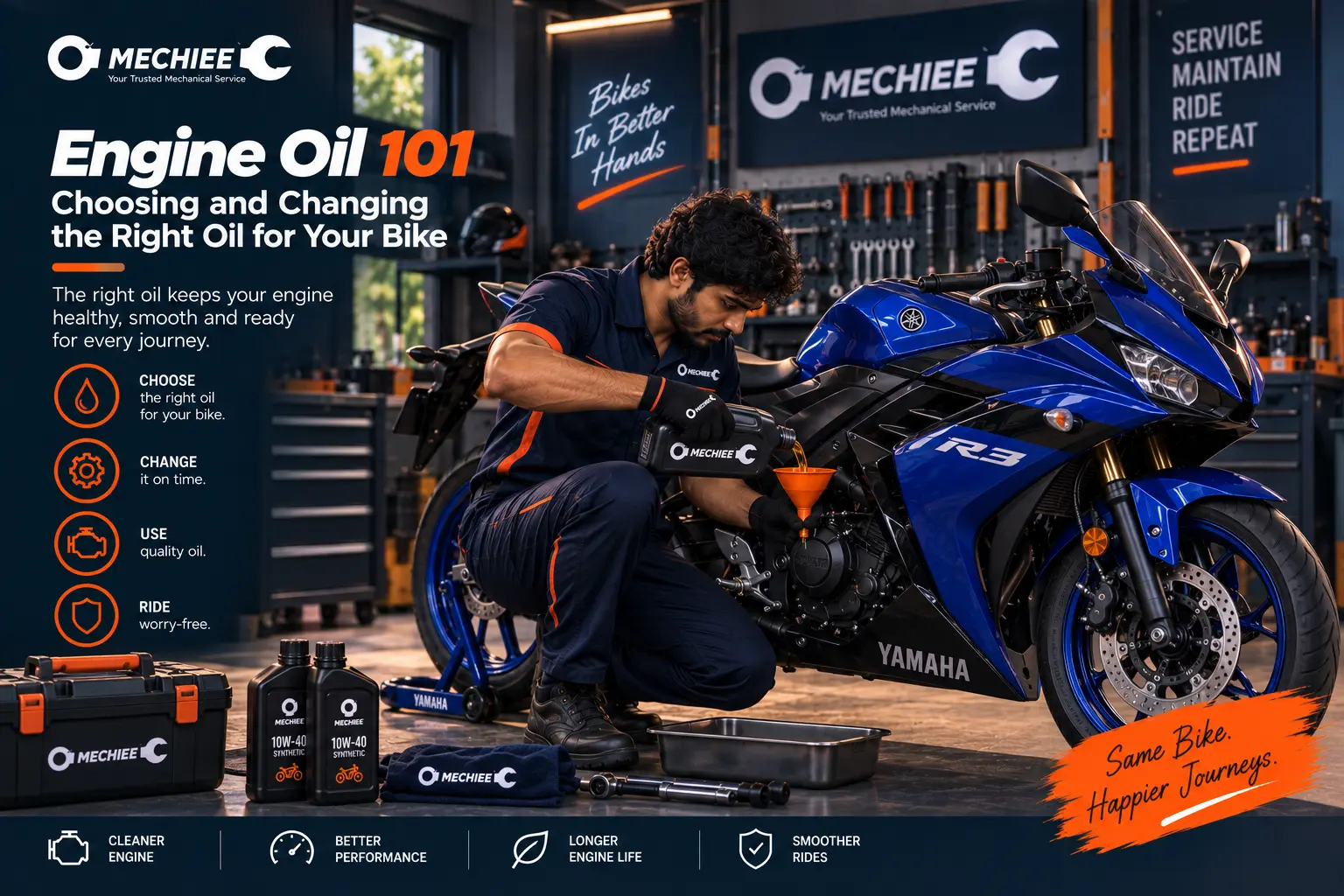
Oil does three jobs at once: it lubricates moving parts, carries heat away from the engine, and picks up carbon and metal particles so they don't grind against internal surfaces. As oil ages, it loses viscosity and its ability to do all three. Running an engine on old, degraded oil is one of the fastest ways to shorten its life. Stick to the interval recommended for your specific bike and riding style — city commuting with constant idling and heat soak often calls for slightly more frequent changes than the manufacturer's highway-tested interval.
Don't Ignore Unusual Sounds
A knocking sound under load, a persistent tapping at idle, or a whine that wasn't there last month are all worth investigating early. Most of these sounds have simple causes — low oil, a loose component, worn valve clearances — that are inexpensive to fix when caught early and expensive once ignored for months.
Coolant and Overheating (Liquid-Cooled Engines)
If your motorcycle is liquid-cooled, check coolant level regularly, especially before summer and before long rides. Riding in heavy traffic on a hot day, with the engine idling for long stretches, is one of the more demanding situations for a cooling system. If your temperature gauge climbs unusually high or the fan runs constantly, get it checked rather than waiting for it to boil over.
Air Filter: The Overlooked Engine Protector
A clogged air filter forces the engine to work harder to pull in air, richens the fuel mixture unnecessarily, and can affect throttle response. In dusty Indian conditions — especially riding near construction sites or unpaved shoulders — air filters clog faster than manufacturer estimates based on cleaner test conditions. A quick visual check monthly, and a proper clean or replacement per your service schedule, keeps the engine breathing properly.
Avoid Prolonged High-RPM Idling and Redlining
Sitting in traffic revving the engine unnecessarily, or consistently riding near redline to "keep up," both add avoidable stress. Smooth, deliberate throttle inputs are easier on internal components than aggressive on-off riding, and they're usually gentler on fuel consumption too.
How Short Trips Affect Engine Health
A five-minute ride to the shop and back never lets the engine fully reach and hold its optimal operating temperature, which matters because condensation and unburnt fuel byproducts that form during cold running need sustained heat to properly burn off and evaporate out of the oil. Riders who mostly do short trips accumulate this effect gradually — it's one of the reasons why "severe service" intervals (shorter than the standard manufacturer schedule) exist and why they matter more for city commuters than highway riders covering the same total distance.
Fuel Quality and Engine Deposits
Inconsistent fuel quality, particularly from stations with questionable storage or handling practices, can leave deposits on valves and injectors over time, gradually affecting how cleanly the engine burns fuel. This shows up first as slightly rougher idling or a small mileage drop, long before it becomes a performance problem you'd notice while riding normally. Sticking to fuel stations you trust is a simple, low-effort form of long-term engine protection.
Break-In Period for New or Rebuilt Engines
If you've just bought a new bike or had engine work done, the break-in period (often the first 500-1,000 km, per your manual) matters more than most riders treat it. Avoiding sustained high RPM, varying your speed rather than holding one constant throttle position, and getting the first service done exactly on schedule all help the internal components — piston rings especially — seat properly, which affects long-term compression and oil consumption.
Reading Your Temperature Gauge, Not Just Reacting to It
If your bike has a temperature gauge, get familiar with where it normally sits during typical riding, rather than only glancing at it when you suspect a problem. A gauge that's crept slightly higher than its usual range over a few weeks, even without reaching a warning zone, is often an earlier and more useful signal than waiting for it to spike into the red. This kind of baseline awareness applies to oil pressure lights and other engine indicators too — knowing what "normal" looks like for your specific bike makes any deviation much easier to catch early.
Frequently Asked Questions
How do I know if my engine oil needs changing before the scheduled interval?
Dark, gritty-feeling oil, a noticeably louder engine, or oil that smells burnt are all signs it's overdue. When in doubt, an early change is far cheaper than the alternative.
Is it bad to let my bike idle for a long time?
Occasional idling isn't harmful, but extended idling generates heat without the airflow a moving bike gets, which isn't ideal for the cooling system or spark plugs over time. Keep warm-ups brief.
Can bad fuel damage my engine?
Consistently fueling at unreliable stations can introduce contaminants that affect the fuel system and, over time, engine performance. Sticking to trusted fuel stations is a simple form of engine protection.
When to Bring in a Professional
Home care covers a lot, but internal engine diagnostics — compression checks, valve clearance, unusual noises you can't place — need a trained eye. Mechiee's Engine Diagnostics and Engine Oil Change services are built for exactly this, delivered at your doorstep so a small issue doesn't turn into a big one. For a deeper look at oil specifically, see our guide on choosing and changing the right engine oil.
Is your bike due for service or inspection?
Don't wait for breakdown emergencies. Book an expert doorstep inspection or general service with Mechiee in under 60 seconds.
Comments
Log in to join the conversation→No comments yet — be the first to share your thoughts.