

Monsoon Riding Guide: How to Ride Safely in the Rain
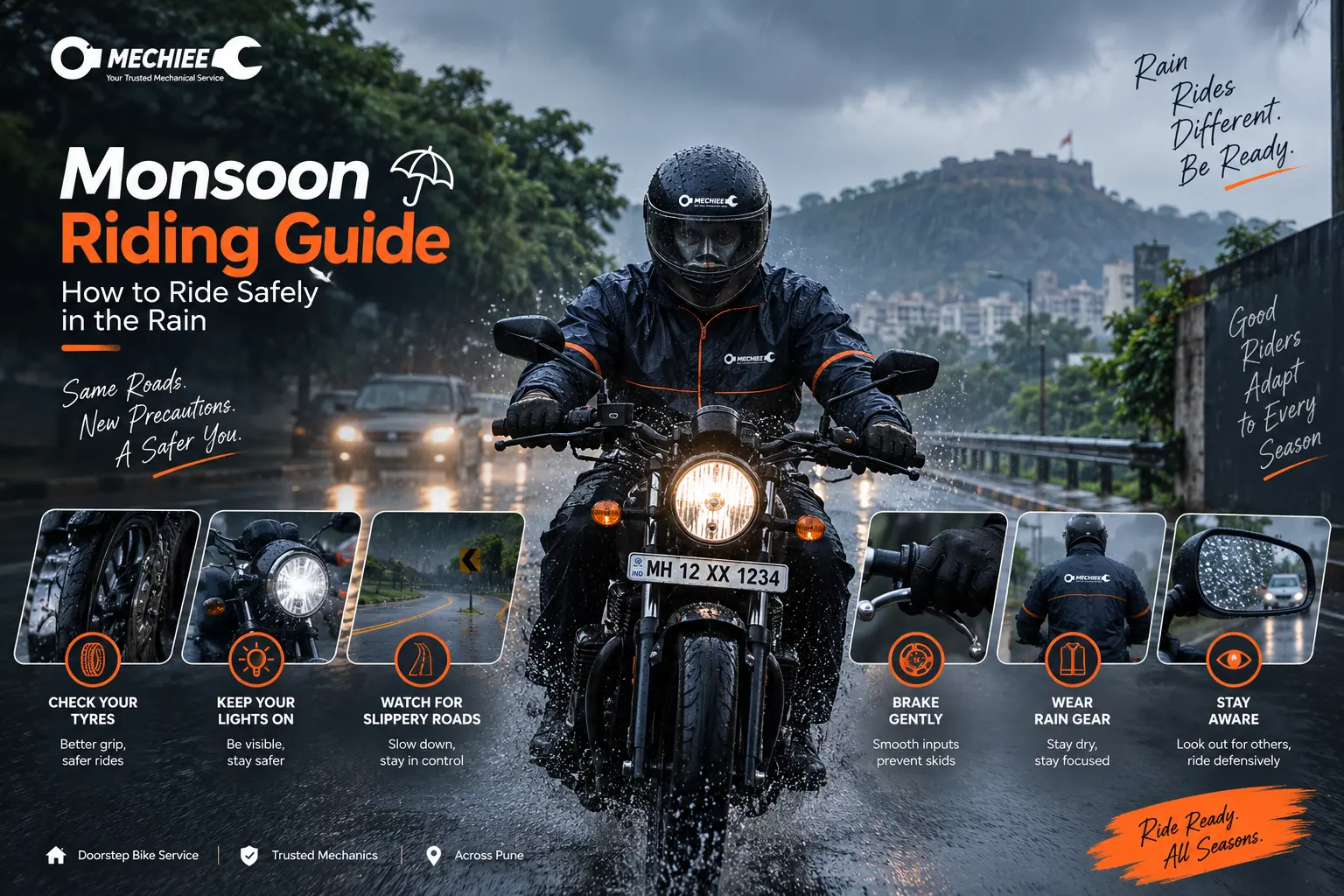
Monsoon riding is a different skill from dry-weather riding — reduced visibility, longer braking distances, and road surfaces that behave unpredictably in ways that catch even experienced riders off guard. A few adjustments to both riding style and bike prep make a real difference.
Prep Your Bike Before the Rains Arrive
- Tyres: check tread depth — worn tyres lose their ability to channel water away and grip drops sharply, especially in the first heavy rain of the season when roads are also washing off months of accumulated oil and grime.
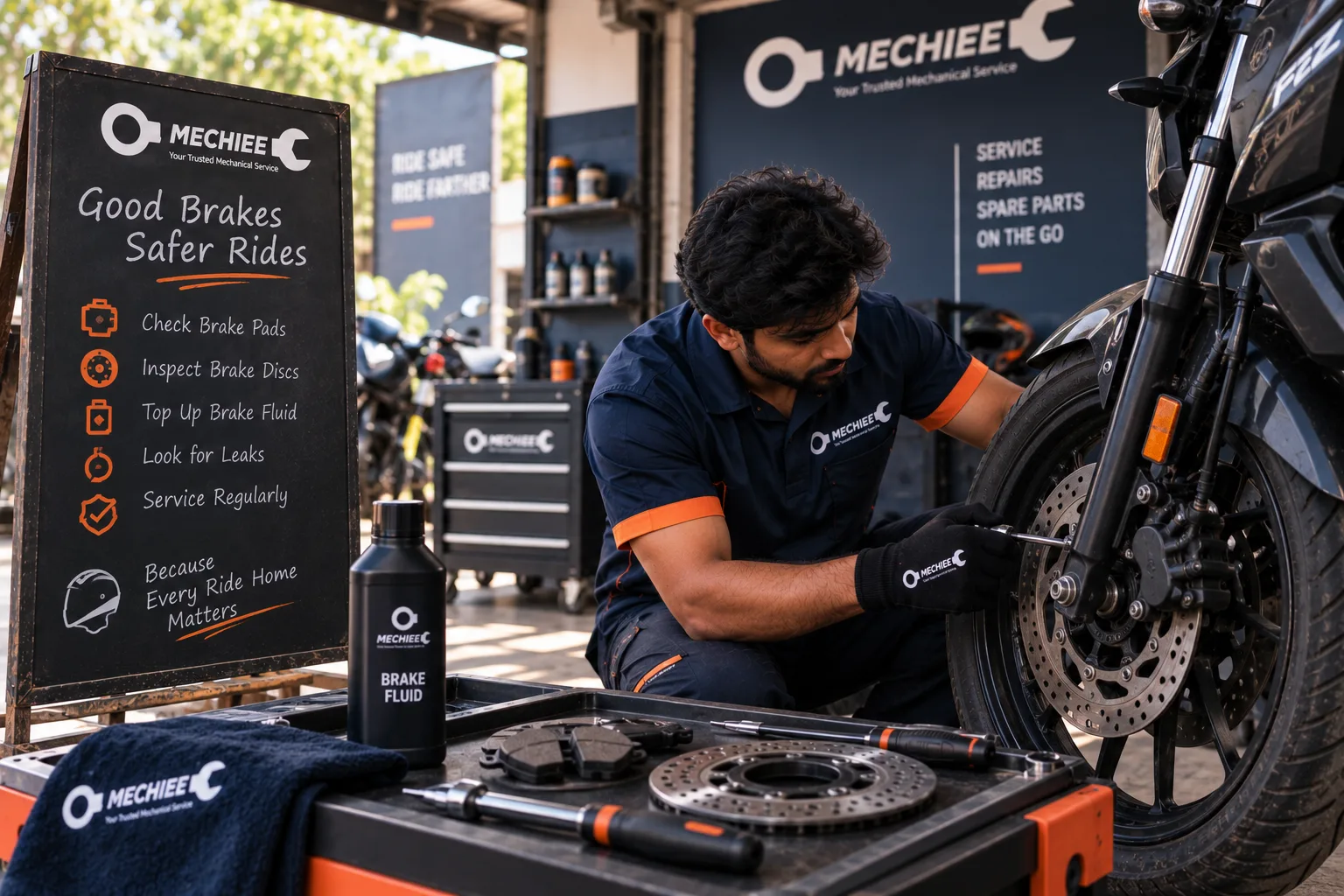
- Brakes: have pads and fluid checked; wet braking already reduces initial bite, so you don't want worn pads compounding the problem.
- Chain: lubricate more frequently during monsoon, since rain washes lubricant off faster than dry riding.
- Electricals: check that wiring connections, especially near the headlight and ignition, are properly sealed — water ingress is a common cause of monsoon breakdowns.
The First Rain Is the Most Dangerous
Roads accumulate oil, rubber dust, and grime over dry weeks, and the first rainfall lifts all of it to the surface before it washes away, creating an unusually slippery layer. Ride with extra caution during the first rain of the season or after a long dry spell — grip returns closer to normal after sustained rain has properly washed the road.
Braking in the Wet
Apply brakes earlier and more gradually than you would in dry conditions — sudden, hard braking on a wet surface is far more likely to lock a wheel and cause a skid. Both front and rear brakes should be applied smoothly and progressively, giving the tyre a moment to find grip before you increase pressure.
Avoid These Surfaces When Wet
- Painted road markings — noticeably more slippery than surrounding tarmac when wet
- Metal surfaces — manhole covers, bridge expansion joints, metal plates over construction work
- Standing water of unknown depth — can hide potholes and creates a real risk of hydroplaning at speed
Visibility Works Both Ways
Rain reduces your visibility of the road and other vehicles' visibility of you. Keep your headlight on, wear gear with some reflective element if possible, and increase following distance since everyone's braking distance is longer in the wet, including the vehicles around you.
Waterproofing Yourself
A proper rain jacket and pants (not just a poncho, which can flap dangerously at speed) keep you dry and, just as importantly, keep you focused on riding instead of being distracted by discomfort. Waterproof gloves and boot covers matter too — wet hands and feet reduce control precision at the exact moment you need it most.
Riding Through Waterlogged Streets
Urban flooding during heavy monsoon spells is a real hazard in many Indian cities. If water depth is uncertain, it's safer to wait or find an alternate route than to ride through — water can conceal potholes, open drain covers, or debris, and water reaching the air intake or exhaust can stall the engine or, in worse cases, cause hydro-lock if water is drawn into the cylinder. If you must cross shallow, clearly visible water, keep the engine at a slightly higher, steady RPM to prevent water from backing up the exhaust, and go through slowly and steadily rather than stopping midway.
Post-Ride Care After Riding in Rain
After a wet ride, a quick wipe-down — especially around electrical connectors, the chain, and any exposed metal parts — reduces the chance of rust starting and helps electrical contacts stay reliable. If your bike sat through a particularly heavy downpour or water crossing, checking the air filter and engine oil for any sign of water contamination (a milky appearance in the oil is a clear warning sign) is a sensible precaution.
Fogging Visors and Reduced Visibility
Humidity and temperature differences during monsoon commonly cause helmet visors to fog, which is genuinely dangerous since it reduces your ability to see hazards with almost no warning. An anti-fog visor insert or spray, or simply cracking the visor slightly open at low speed, helps manage this — riding with a significantly fogged visor is a bigger risk than most riders treat it as.
Knowing When Not to Ride
Not every monsoon downpour is meant to be ridden through. Extremely heavy rainfall with very low visibility, reported waterlogging on your route, or lightning during a severe storm are all situations where waiting it out, even for twenty or thirty minutes under shelter, is a genuinely better decision than pushing on. Treating monsoon riding as something to manage carefully, not something to always power through regardless of severity, is itself a safety skill.
Post-Monsoon Recovery for Your Bike
Once the season eases, give your bike a proper once-over rather than assuming it survived unscathed just because nothing went obviously wrong during the rains. Months of intermittent wet riding can leave subtle rust starting on fasteners, slightly degraded brake performance from repeated wet-dry cycles, and a chain that's seen more wear than a comparable dry-season stretch — all worth catching in a single post-monsoon check rather than discovering individually over the following weeks.
Frequently Asked Questions
Should I ride slower in the rain even on familiar roads?
Yes — familiarity with a route doesn't change the physics of reduced tyre grip and longer stopping distances. Slowing down is one of the simplest and most effective monsoon safety measures.
Why does my bike feel less powerful or hesitant in heavy rain?
Water can sometimes affect spark plug performance or, on older bikes, ignition components if seals have degraded. If this happens consistently, it's worth having the electricals checked rather than just living with it.
Is it safe to ride through standing water on the road?
Only if you can clearly judge the depth and there's no visible current or debris. Deep or fast-moving water can stall the engine, hide a pothole, or in worse cases, sweep a lightweight bike off balance.
Get Monsoon-Ready
A pre-monsoon check covering brakes, tyres, chain, and electricals catches the issues that tend to surface once the rains actually begin. Mechiee's Brake Inspection and Chain Cleaning & Lubrication services are a good starting point before the season turns.
Is your bike due for service or inspection?
Don't wait for breakdown emergencies. Book an expert doorstep inspection or general service with Mechiee in under 60 seconds.
Comments
Log in to join the conversation→No comments yet — be the first to share your thoughts.