

Brake Maintenance Guide: Keeping Your Motorcycle Brakes Safe
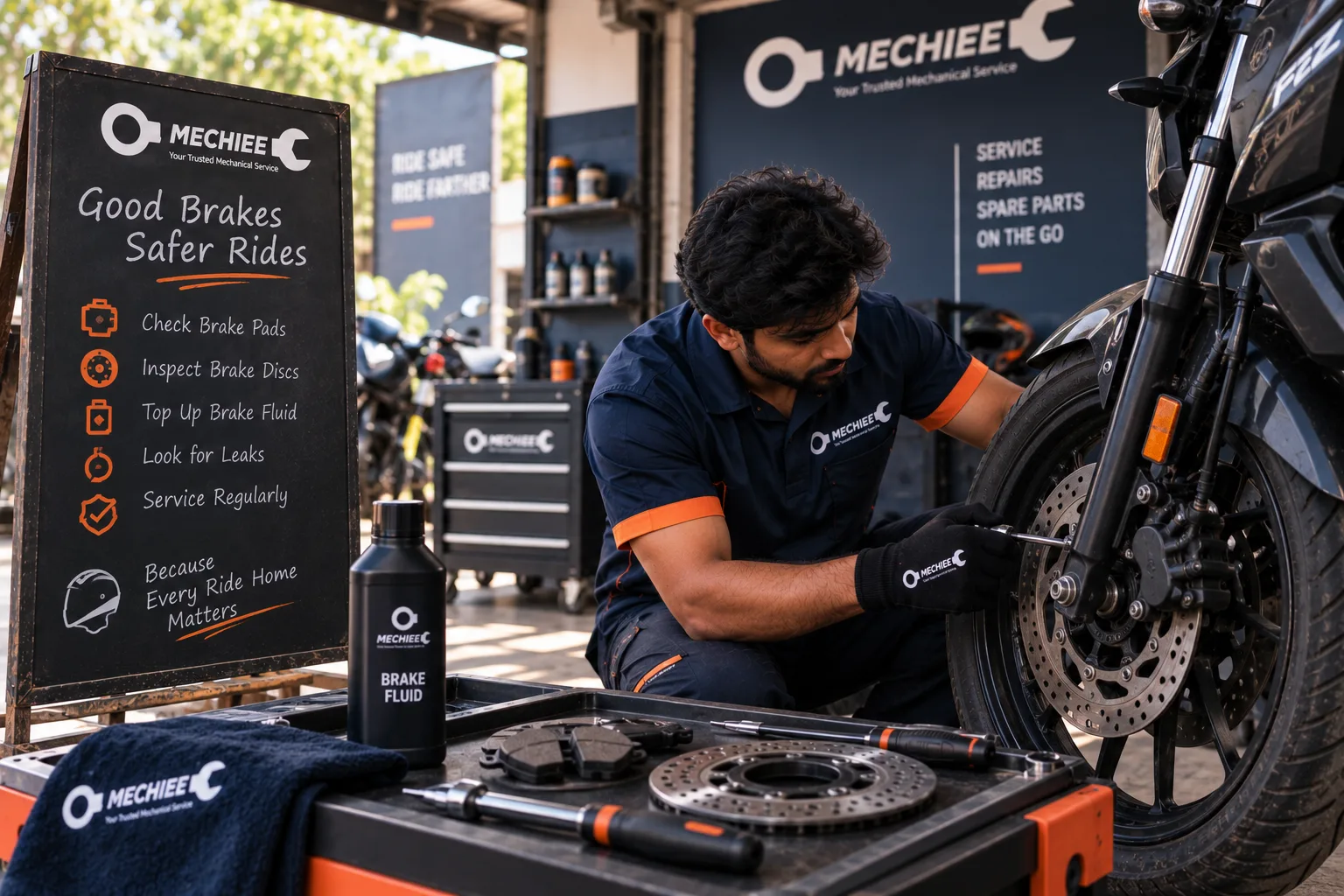
Of all the systems on a motorcycle, brakes are the least forgiving of neglect. An engine problem usually gives you time to pull over; a brake problem can show up exactly when you need to stop fastest. Understanding how your brakes work — and what to check regularly — is one of the most important things any rider can learn.
Disc Brakes vs Drum Brakes
Disc brakes use hydraulic fluid to press pads against a metal rotor, offering strong, consistent stopping power and better heat dissipation — which is why most front brakes on modern motorcycles are discs. Drum brakes use expanding shoes pressing outward against the inside of a drum; they're simpler and cheaper but less effective at shedding heat during repeated hard braking, which is why they're more commonly found on rear wheels or smaller commuter bikes.
Brake Fluid: The Overlooked Essential (Disc Brakes)
Brake fluid is hygroscopic — it absorbs moisture from the air over time, even in a sealed system. Moisture-contaminated fluid has a lower boiling point, which can lead to a spongy lever feel or, in extreme cases, brake fade during sustained hard use like a long descent. Most manufacturers recommend replacing brake fluid roughly every one to two years, regardless of how the lever feels, simply because moisture absorption happens gradually and invisibly.
Brake Pad and Shoe Wear
Pads and shoes wear down every time you brake — that's expected. What matters is catching them before they wear down to the metal backing, which can damage the rotor or drum and turns an inexpensive pad replacement into a more expensive rotor or drum replacement. Most pads have a wear indicator groove; when it disappears, it's time.
Warning Signs You Should Never Ignore
- Squealing or grinding noise when braking — often the wear indicator doing its job, or in worse cases, metal-on-metal contact.
- A spongy or soft lever/pedal that sinks further than usual — often points to air in the brake line or degraded fluid.
- The bike pulling to one side under braking — can indicate uneven pad wear or a sticking caliper.
- Vibration or pulsing through the lever — often a warped rotor, usually from excessive heat buildup.
Braking in the Rain
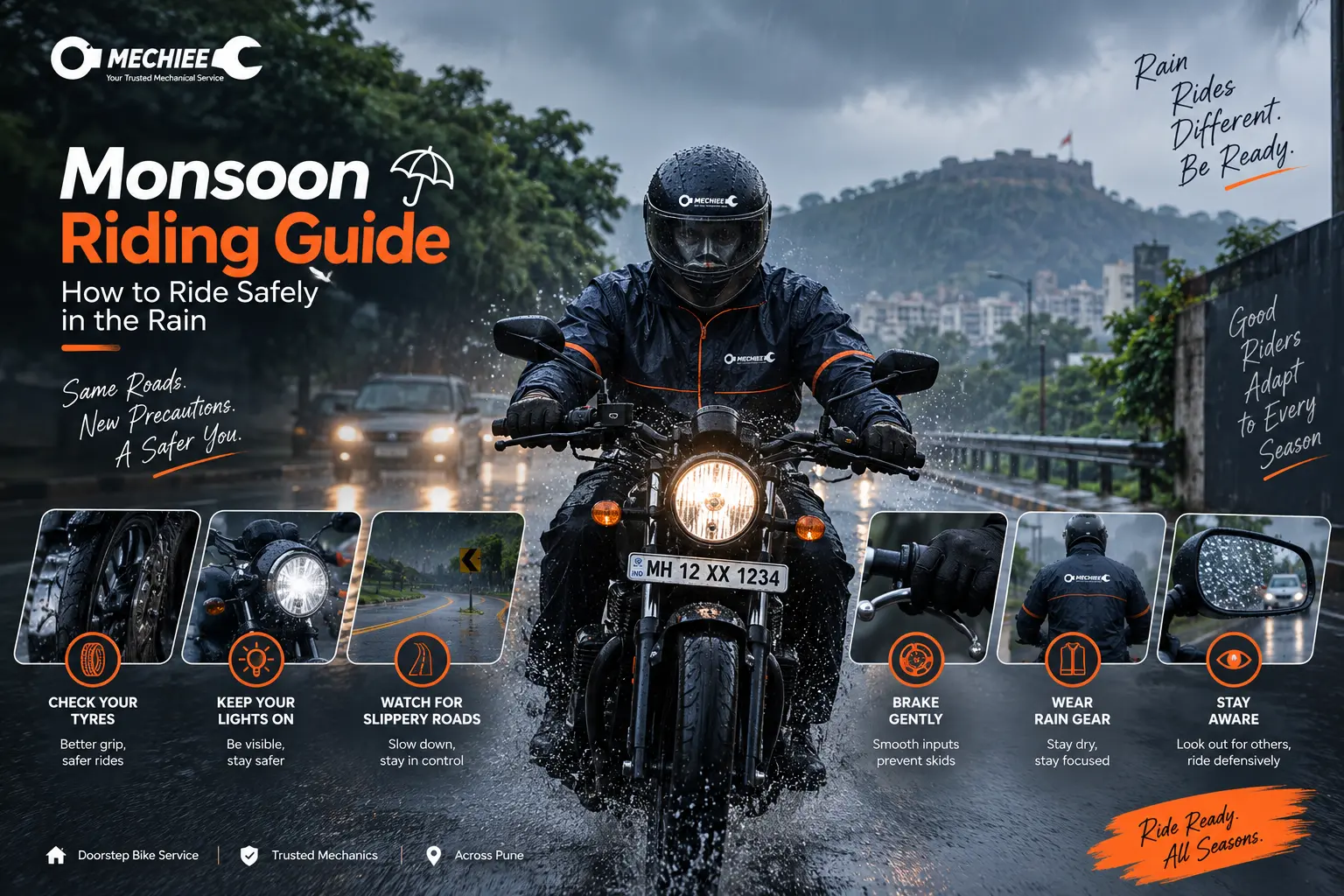
Wet rotors and drums reduce initial braking effectiveness for the first second or two of lever/pedal application, since water has to be displaced from the friction surface first. Riders who understand this apply brakes slightly earlier and more gradually in the rain rather than expecting the same immediate bite as dry conditions.
Simple Checks You Can Do at Home
- Visually inspect pad thickness through the caliper (most calipers have a visible gap to check this without removing anything).
- Check brake fluid level in the reservoir — it should sit between the min/max marks.
- Test lever and pedal feel before every ride — it should feel firm, with consistent resistance, not spongy or delayed.
Front Brake vs Rear Brake: Using Them Correctly
The front brake provides the majority of a motorcycle's stopping power under normal conditions, since weight shifts forward under braking and loads the front tyre's contact patch. Relying too heavily on the rear brake alone, a common habit among newer riders nervous about the front brake, actually reduces overall stopping performance and increases stopping distance. Learning to apply both brakes together, with the front doing more of the work, is one of the most valuable skills a rider can build — ideally practiced in a safe, empty area before it's needed in an emergency.
ABS and Combined Braking Systems
Many newer motorcycles come equipped with anti-lock braking systems (ABS), which prevent wheel lockup during hard braking by rapidly modulating brake pressure. This is particularly valuable on wet or loose surfaces where a locked wheel can cause a skid. If your bike has ABS, avoid the instinct to release the brake when you feel the characteristic pulsing at the lever — that pulsing means the system is working, and maintaining firm pressure lets it do its job.
Heat and Brake Fade
Extended hard braking — common on long descents or repeated stop-and-go in heavy traffic — generates heat that, if it builds up faster than it can dissipate, reduces braking effectiveness temporarily, a phenomenon known as brake fade. Using engine braking (downshifting) to help control speed on long descents, rather than relying purely on the brakes, reduces this risk considerably.
The Cost of Delaying Brake Repairs
Because brake wear is gradual, it's tempting to postpone a check when the lever still feels "mostly fine." But pads worn down to their backing plate damage the rotor they're pressing against, turning a routine pad replacement into a rotor replacement too — a larger expense that a timely check would have avoided entirely. Given how directly brakes affect your safety, this is one system where erring on the side of an earlier check is almost always the right call.
Frequently Asked Questions
Why does my brake lever feel spongy even though the pads look fine?
A spongy lever with healthy pads usually points to air trapped in the brake line or old fluid that needs bleeding and replacing, not a pad problem.
How long do brake pads typically last?
It varies significantly with riding style and traffic conditions — heavy city braking wears pads faster than steady highway riding. Rather than relying on a fixed distance, a periodic visual or professional check is more reliable than assuming a set number of kilometers.
Is it normal for new brake pads to feel less effective at first?
Yes, new pads typically need a short bedding-in period (a series of gentle, then progressively firmer stops) to reach their full effectiveness. Avoid aggressive braking on the first few rides after a pad change.
Don't Compromise on Brakes
Given how safety-critical brakes are, this is one area where a professional inspection is worth doing on schedule, not just when something feels off. Mechiee's Brake Inspection and Brake Pad Replacement services check fluid, pads, and overall system health at your doorstep. If you're heading into monsoon season, also read our monsoon riding guide for wet-weather braking tips.
Is your bike due for service or inspection?
Don't wait for breakdown emergencies. Book an expert doorstep inspection or general service with Mechiee in under 60 seconds.
Comments
Log in to join the conversation→No comments yet — be the first to share your thoughts.