

Long Rides on a Motorcycle: Pre-Ride Checklist & Tips
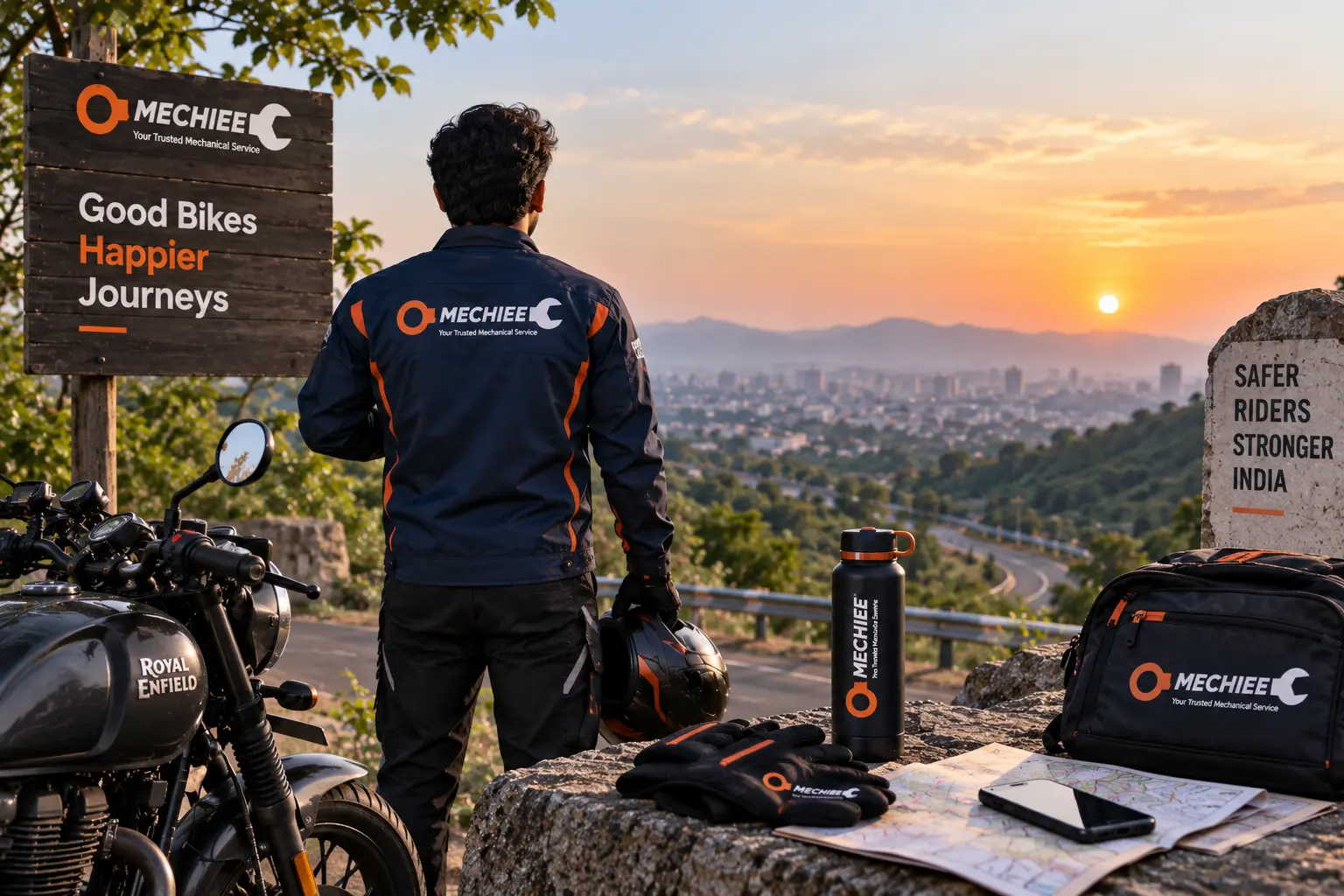
A long ride puts a different kind of demand on a motorcycle than daily commuting — sustained highway speeds, extended engine run time, and being far from your usual mechanic if something goes wrong. A proper pre-ride check catches most of the issues that could otherwise turn a good trip into a stressful one.
Mechanical Pre-Ride Checklist
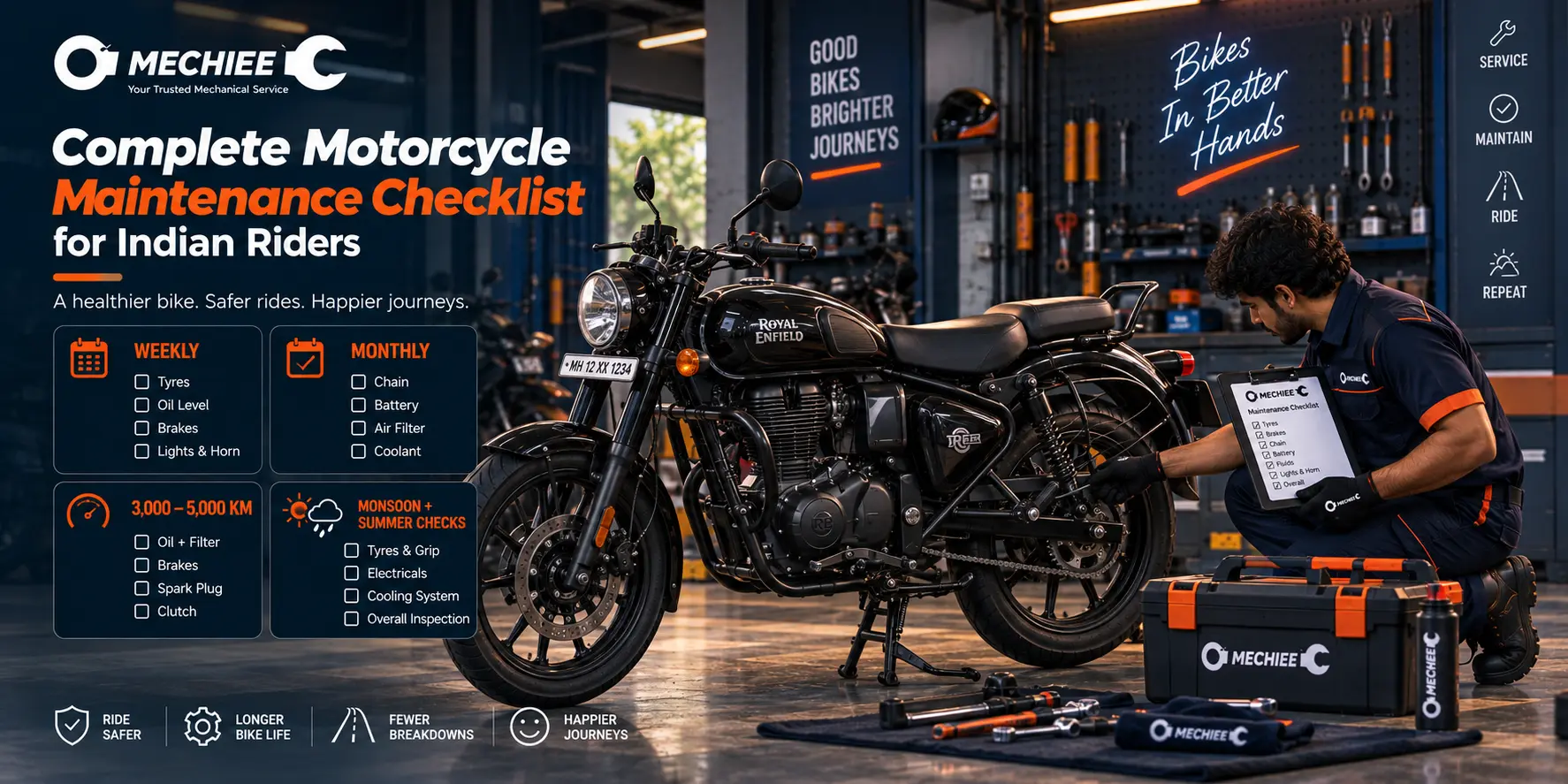
- Engine oil — check level and consider a fresh change if you're close to your service interval; you don't want to be due mid-trip.
- Tyres — check pressure (adjusted if you'll be carrying extra luggage or a pillion) and tread depth; long rides are not the time to be running on borderline tyres.
- Brakes — pad thickness and fluid level, since sustained highway speeds mean you'll rely on strong, consistent braking.
- Chain — clean, lubricate, and check slack; a well-adjusted chain matters even more over hundreds of continuous kilometers.
- Battery and electricals — test lights, horn, and indicators; a weak battery is far more inconvenient to deal with on an unfamiliar highway than at home.
- Coolant (if applicable) — top up and check for leaks, since sustained highway riding at higher RPM generates more heat than city riding.
Give Yourself a Buffer Before Departure
Ideally, get any maintenance done a few days before departure, not the night before. This gives you time to notice if anything feels different after the service and address it before you're already on the road.
What to Carry
- A basic tool kit matched to your bike (many come with one from the factory — check it's actually still in the underseat storage)
- A tyre puncture repair kit and a compact air pump or CO2 inflator
- Spare fuses, if your bike uses them, and a spare bulb if easily accessible
- Your vehicle documents, insurance, and a basic first-aid kit
- A fully charged phone and a portable charger or power bank
Plan Fuel Stops on Unfamiliar Routes
On highway stretches with long gaps between towns, don't let your tank run low banking on "the next station." Research fuel stop availability along your route beforehand, especially for less common or newer motorcycle models where fuel-efficient riding matters more for range.
Pace Yourself and Your Bike
Sustained high-speed highway riding for hours generates more heat and wear than the same distance covered in shorter city trips. Taking periodic breaks — even 10-15 minutes every couple of hours — gives both you and the bike (especially the engine and brakes) a chance to cool down, and it measurably improves rider alertness on longer trips.
Reading Your Bike's Signals on the Road
Long rides give you an unusually good opportunity to notice small changes, simply because you're on the bike for extended, uninterrupted stretches. A slight new vibration that appears only above a certain speed, a subtle change in exhaust note, or a temperature gauge that's running a touch warmer than your normal baseline are all things a long ride tends to reveal faster than daily short trips would. Pay attention rather than dismissing small changes as "probably nothing."
Choosing Fuel Stops Wisely
Beyond just availability, fuel quality can vary between stations, especially in smaller towns along less-traveled routes. Where possible, favor well-known, reputable fuel brands over unfamiliar local stations, particularly for a long tour where you can't easily recover from a bad tank of fuel affecting performance mid-trip.
Riding With a Pillion or Extra Luggage
Additional weight changes braking distance, cornering feel, and how the suspension behaves over bumps — all of which matter more over a long, sustained ride than a short trip. If you're carrying a pillion or significant luggage for the first time on a particular bike, a short practice ride beforehand helps you adjust before committing to a long-distance trip with the unfamiliar load.
Mental Preparation Matters Too
Long rides demand sustained focus in a way daily commuting doesn't always require, since a lapse in concentration a hundred kilometers from home carries different consequences than one a few minutes from your house. Getting proper rest the night before departure, avoiding an overly ambitious first-day distance, and being honest with yourself about when fatigue is setting in are as much a part of long-ride preparation as the mechanical checklist itself.
The Return Journey Deserves the Same Attention
It's easy to focus preparation entirely on the outbound leg and treat the return as an afterthought, but a bike that's covered several hundred kilometers already has accumulated some wear — a chain that may need re-lubrication, tyres worth rechecking for pressure and any picked-up debris, and an oil level worth confirming, especially if the trip included challenging terrain. A brief mid-trip or pre-return check takes only a few minutes and catches anything that developed during the outbound distance.
Choosing Companions Who Ride Compatibly
If you're riding with others, mismatched pace and experience levels can quietly create pressure to ride faster or take more risks than you'd choose alone. Agreeing beforehand on a comfortable shared pace, and genuinely respecting it rather than treating it as a soft suggestion, keeps a long ride enjoyable rather than turning it into an unspoken competition that raises everyone's risk level.
Frequently Asked Questions
How far in advance should I service my bike before a long ride?
A few days to a week ahead is a good window — enough time to catch and fix anything unexpected, without the service being so early that new issues develop before departure.
Should I carry spare parts on a long ride?
For most riders, a basic tool kit and puncture repair kit cover the majority of roadside situations. Carrying spare consumables like fuses and bulbs is worthwhile since they're small, light, and can otherwise strand you over a minor fault.
Is it okay to do a long ride on a bike that's slightly overdue for service?
It's best avoided if the overdue item is safety-related (brakes, tyres) or engine-critical (oil). Minor cosmetic or comfort items can usually wait, but anything affecting stopping or reliability is worth addressing first.
Start the Trip With Peace of Mind
A full pre-ride inspection covering the essentials above is one of the best investments you can make before a long trip. Mechiee's General Inspection and Periodic Service are built exactly for this — see our touring preparation guide for a deeper packing and planning checklist.
Is your bike due for service or inspection?
Don't wait for breakdown emergencies. Book an expert doorstep inspection or general service with Mechiee in under 60 seconds.
Comments
Log in to join the conversation→No comments yet — be the first to share your thoughts.