

How to Improve Motorcycle Fuel Efficiency: Practical Tips
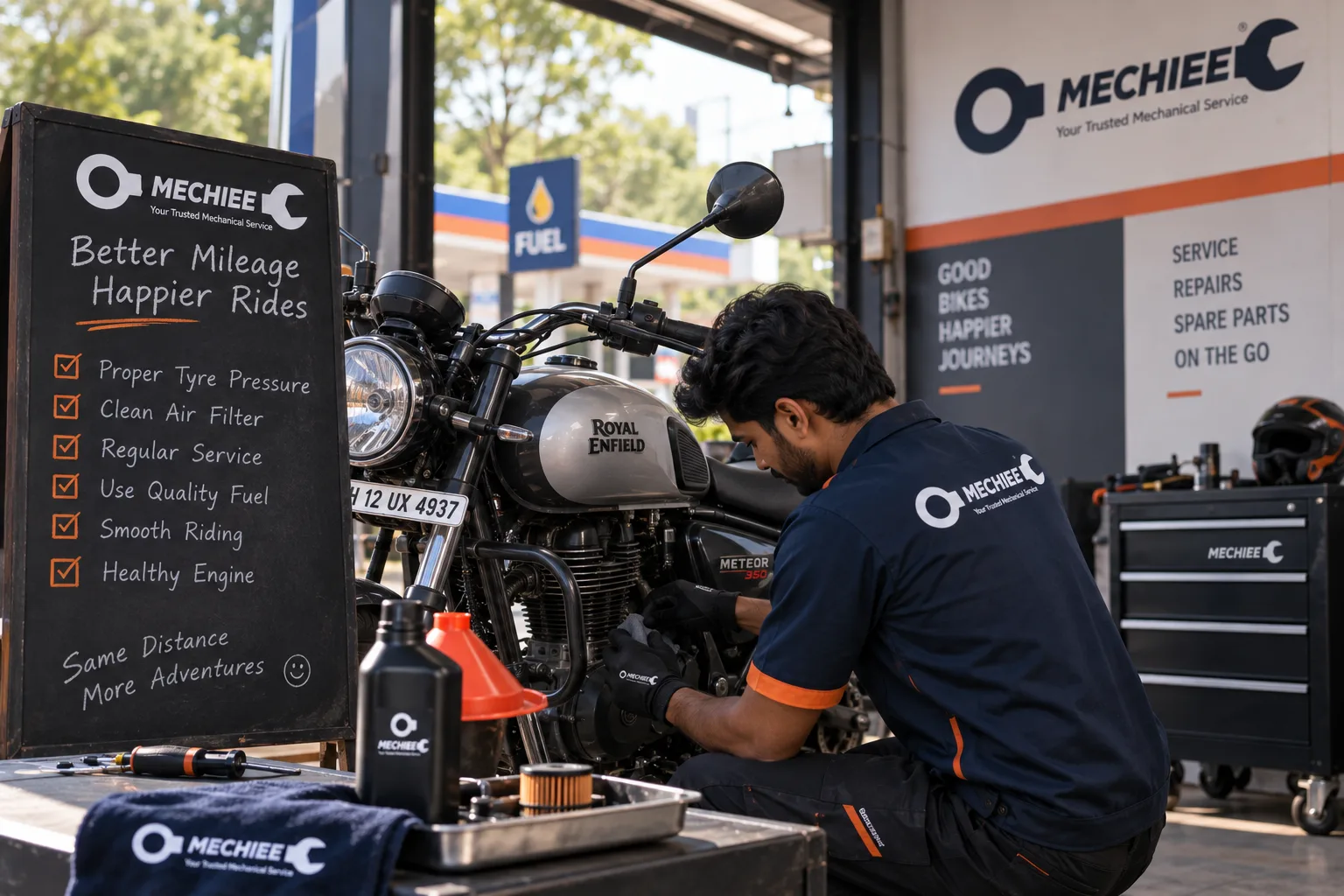
Fuel efficiency is one of the most talked-about topics among riders, and also one of the most surrounded by myths. The good news is that the things which genuinely improve mileage are mostly simple, consistent habits and basic maintenance — not gimmicks or aftermarket add-ons.
Riding Style Matters More Than Almost Anything Else
Smooth, gradual acceleration uses noticeably less fuel than aggressive, snap-throttle riding, especially in stop-and-go traffic. Anticipating traffic signals and slowing gradually (rather than accelerating hard only to brake hard moments later) saves fuel and reduces wear on your brakes and clutch at the same time.
Maintain the Right Tyre Pressure
Underinflated tyres increase rolling resistance, meaning your engine works harder to maintain the same speed. This is one of the simplest, most overlooked fuel efficiency factors — a quick weekly pressure check costs nothing and directly affects mileage.
Keep Your Air Filter Clean
A clogged air filter restricts airflow to the engine, which can richen the fuel mixture unnecessarily and reduce efficiency. Given how inexpensive an air filter check or replacement is, it's one of the better returns on a small maintenance investment.
Don't Ignore a Dragging Brake or Misaligned Chain
A brake that's not fully releasing, or a chain that's too tight, both create constant, invisible resistance that the engine has to work against on every single rotation of the wheel — quietly eating into your mileage without any obvious symptom beyond gradually worsening fuel economy.
Avoid Unnecessary Idling
Long idling periods burn fuel without covering any distance. If you're going to be stationary for more than a minute or so — a long signal, waiting for someone — switching off the engine (where practical and safe) saves fuel over the course of a day's riding.
Service Intervals Directly Affect Mileage
Old engine oil, worn spark plugs, and a dirty air filter all combine to reduce combustion efficiency gradually. Riders who notice mileage dropping over several months, without any single obvious cause, are often simply due for a service — engine oil, spark plug, and air filter changes routinely restore mileage that's crept downward.
Load and Aerodynamics
Carrying unnecessary weight, riding with poorly packed or loose luggage that creates drag, or an aftermarket windscreen or accessory that disrupts airflow can all have a small but measurable effect on efficiency, particularly at higher, sustained speeds.
What Doesn't Actually Help Much
Fuel additives marketed as mileage boosters generally have limited, inconsistent real-world impact for a well-maintained engine. The fundamentals — riding style, tyre pressure, and timely maintenance — consistently make a bigger difference than any single additive or gadget.
Gear Selection and Engine RPM
Riding in too low a gear for your speed keeps engine RPM higher than necessary, burning more fuel than riding in the appropriate gear for the same road speed. Conversely, "lugging" the engine in too high a gear at very low RPM can cause the engine to labor inefficiently too. Learning your bike's sweet spot — shifting up as soon as the engine has adequate power to do so smoothly — is a skill that pays off in mileage over time.
City vs Highway Mileage Differences
It's normal for the same bike to return noticeably different mileage in dense city traffic compared to steady highway cruising — frequent stopping, idling, and acceleration in the city simply use more fuel per kilometer than maintaining a constant speed. Riders sometimes worry unnecessarily about a mileage difference that's actually just the expected result of comparing city and highway riding conditions rather than an actual mechanical problem.
Tracking Your Mileage Properly
To notice genuine changes in efficiency, track mileage consistently over a few tank fills rather than judging from a single tank, since riding conditions vary trip to trip. A simple habit of noting odometer readings at each full tank gives you a much more reliable baseline than relying on a rough sense of "it feels like it's using more fuel lately."
Aftermarket Modifications and Their Real Effect
Some riders modify exhausts, air filters, or other components hoping for a mileage or performance improvement. In practice, many aftermarket changes that alter the engine's designed air-fuel balance can reduce efficiency rather than improve it, unless properly tuned to match the modification — an aftermarket exhaust without a corresponding fuel mapping adjustment, for instance, often hurts mileage rather than helping it. If efficiency is genuinely the goal, well-maintained stock components usually outperform poorly matched modifications.
Setting Realistic Expectations
It's worth remembering that mileage figures quoted for a given bike model are typically achieved under specific test conditions that rarely match everyday riding exactly. A reasonable goal is steady, gradual improvement in your own bike's mileage through the habits above, rather than chasing an exact published figure that assumes riding conditions most daily commuters simply don't have.
Tracking Progress Over Weeks, Not Days
If you make several efficiency-focused changes at once — smoother riding, corrected tyre pressure, a fresh air filter — give it a few weeks and several tank fills before judging the combined effect. Fuel efficiency naturally fluctuates a little with traffic conditions, weather, and even the specific mix of routes ridden that week, so a single unusually good or poor tank isn't a reliable signal on its own.
Frequently Asked Questions
Does the type of fuel station I use affect mileage?
Fuel quality consistency matters more than brand loyalty for its own sake. Sticking to reliable, well-maintained fuel stations helps avoid contamination issues that can affect both performance and long-term engine health.
Can spark plug condition really affect fuel efficiency?
Yes — a worn or fouled spark plug causes incomplete combustion, which both wastes fuel and reduces power. It's a relatively inexpensive part to replace on schedule for the efficiency benefit alone.
Why did my mileage suddenly drop even though I haven't changed my riding style?
A sudden, unexplained drop is worth investigating rather than dismissing — common causes include a dragging brake, low tyre pressure, a clogged air filter, or a service that's overdue.
Small Habits, Real Savings
Consistent maintenance is the foundation of good fuel efficiency. Mechiee's Air Filter Cleaning and Spark Plug Replacement services are a good, affordable starting point if your mileage has been slipping.
Is your bike due for service or inspection?
Don't wait for breakdown emergencies. Book an expert doorstep inspection or general service with Mechiee in under 60 seconds.

Comments
Log in to join the conversation→No comments yet — be the first to share your thoughts.