How to Improve Motorcycle Fuel Efficiency: Practical Tips
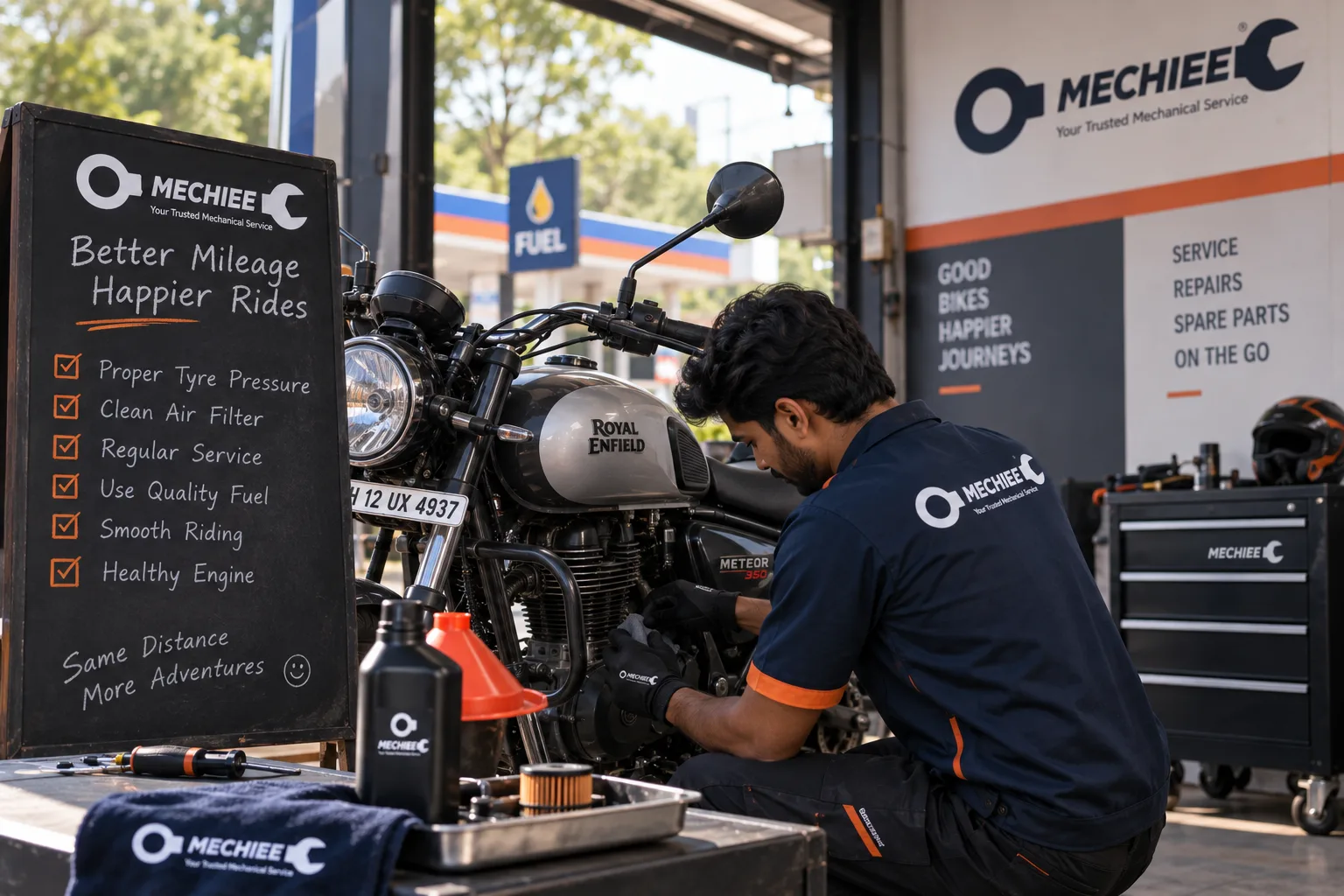
Small, consistent habits — not gimmicks — are what actually improve your bike's mileage. Here's what genuinely makes a difference and what doesn't.
Pratik Gore
19 Aug 2026

Replace a worn spark plug to restore smooth starts, stable idling, and consistent power delivery.
The spark plug is a small part with a big job — igniting the fuel-air mixture in the cylinder at exactly the right moment, thousands of times per minute. As the electrode gap wears and deposits build up, the spark becomes weaker and less consistent, which shows up as harder starts, rougher idling, and a slight but noticeable dip in fuel efficiency. It's an inexpensive part and a quick swap, which makes it one of the best value-for-money services when these symptoms appear.
15–20 minutes
Every 8,000–10,000 km, or as specified in your owner's manual
Riders noticing harder starts, rough idling, or a dip in mileage — often paired with an oil change for maximum effect.

The existing spark plug is removed and inspected for wear, fouling, or damage.
A replacement plug matched to your engine's specification and heat range is chosen.
The new plug is fitted and torqued to the correct specification to avoid thread damage.
The engine is started and idle stability is checked to confirm the fix.
Hard starting, rough idling, reduced mileage, or a loss of power under acceleration are common signs. The mechanic also visually inspects the plug's condition to confirm before replacing it.
Typically every 8,000–10,000 km, though this can vary by bike model — check your owner's manual for the exact recommendation.
A worn plug alone usually won't cause serious damage, but riding for a long time with poor combustion can lead to carbon build-up and reduced efficiency over time.
No — the correct plug type and heat range depends on your specific engine. Mechiee mechanics use the plug specified for your exact model.
It's a common and efficient pairing since both are quick services that noticeably improve how the bike runs, especially if it's due for both around the same time.
About 15 to 20 minutes on most bikes.

Drain the old engine oil, replace it with the right grade for your bike, and check the oil filter — the single most important habit for engine longevity.
View Details
Clean out dust and debris trapped in your bike's air filter so the engine breathes freely and runs efficiently.
View Details
A systematic check to pinpoint unusual engine noise, power loss, or performance issues before they turn into a major repair.
View Details
Small, consistent habits — not gimmicks — are what actually improve your bike's mileage. Here's what genuinely makes a difference and what doesn't.
Pratik Gore
19 Aug 2026
Verified mechanics, live tracking, and a digital record of every job — start to finish.