

Common Motorcycle Breakdowns and How to Handle Them
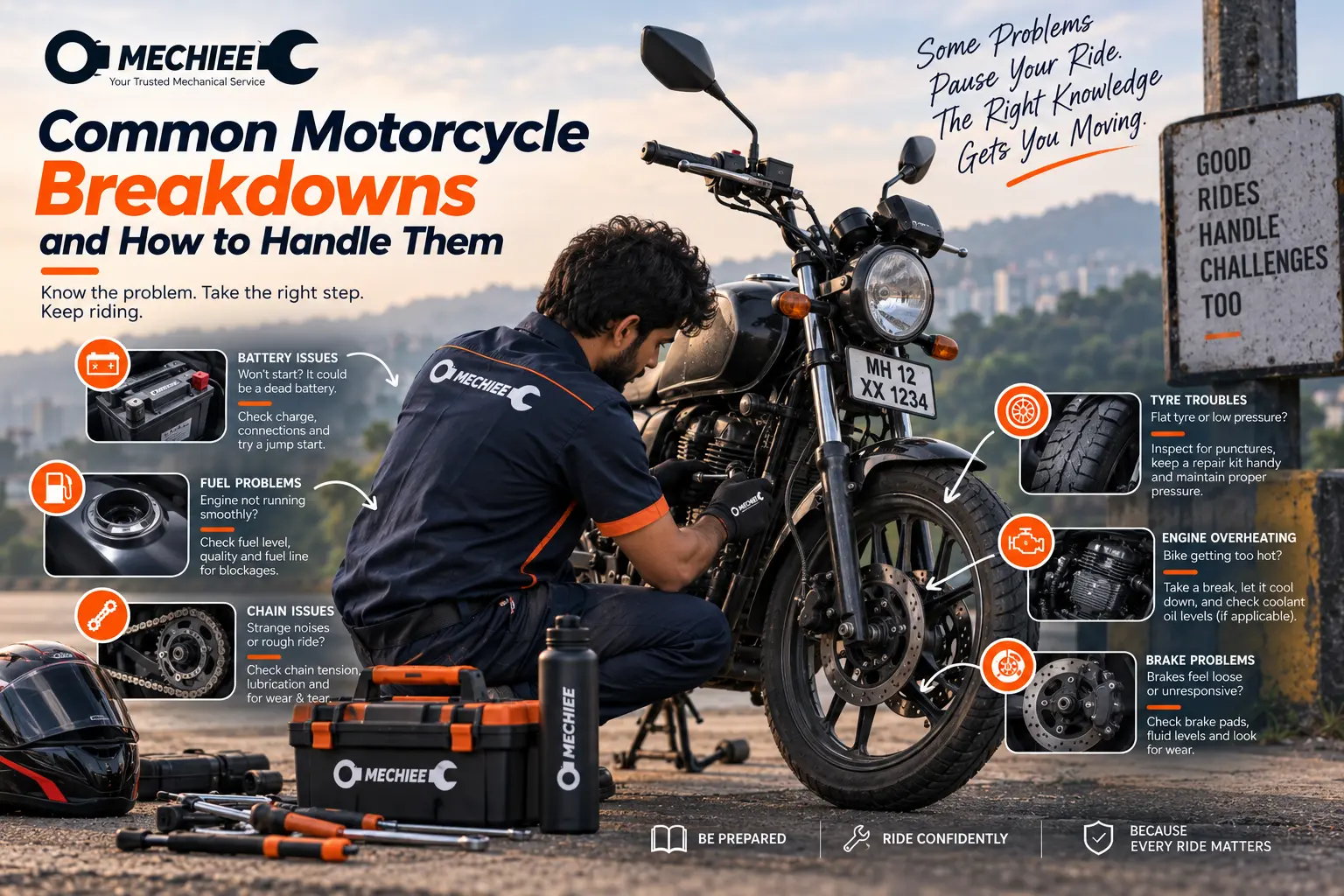
Even a well-maintained motorcycle can occasionally leave you stranded — a part reaches the end of its life at an inconvenient moment, or something unexpected happens. Knowing how to recognize the most common breakdown types, and what (if anything) you can safely do about them on the spot, makes these situations far less stressful.
The Bike Won't Start
This is one of the most common roadside issues, and the cause is usually one of a few things: a dead or weak battery (slow or absent cranking), an empty fuel tank (easy to overlook if your fuel gauge is inaccurate), a loose battery terminal, or in carbureted bikes, a stuck or flooded carburetor. Check the obvious things first — fuel level, whether the kill switch is in the right position, and whether you're in neutral (for bikes that require it to start) — before assuming something more serious.
Sudden Loss of Power While Riding
If the engine suddenly loses power or cuts out while moving, common causes include running out of fuel, a fouled spark plug, or overheating (in liquid-cooled engines, check the temperature gauge). Pull over safely as soon as possible rather than continuing to ride while trying to diagnose it.
A Snapped Clutch or Throttle Cable
Cables rarely snap without warning — they usually show signs of fraying or increasing stiffness beforehand, which is why regular checks matter. If a clutch cable snaps, you can often still ride cautiously in a fixed gear without using the clutch (starting in gear on the side/center stand and shifting by briefly cutting power), but this is a "get to safety" measure, not a real fix.
A Flat Tyre
If you feel sudden instability or hear a hissing sound, pull over immediately and check. Riding on a flat, even briefly, can damage the wheel rim and make the tyre unrepairable. A puncture repair kit and portable inflator can get you moving again for a puncture in the tread; sidewall damage generally needs a tow or roadside tyre replacement.
Overheating
If your temperature gauge climbs into the red or you notice steam, pull over and let the engine cool before checking coolant level — never open a hot radiator cap, as pressurized hot coolant can cause serious burns. Once cooled, check for obvious leaks before continuing cautiously to a service point.
Electrical Failures
A sudden loss of lights, indicators, or the horn often points to a blown fuse or a loose connection rather than something catastrophic. Carrying a spare fuse or two, and knowing where your fuse box is located, can resolve this quickly on the roadside.
When to Call for Help vs Attempt a Fix Yourself
Simple issues — a loose terminal, a puncture with a repair kit, a blown fuse you can replace — are reasonable to attempt roadside if you're comfortable doing so. Anything involving the engine internals, brakes, or suspicious fluid leaks is safer left to a professional, even if it means waiting for help rather than risking further damage or an unsafe ride.
Breakdowns Unique to Monsoon and Extreme Heat
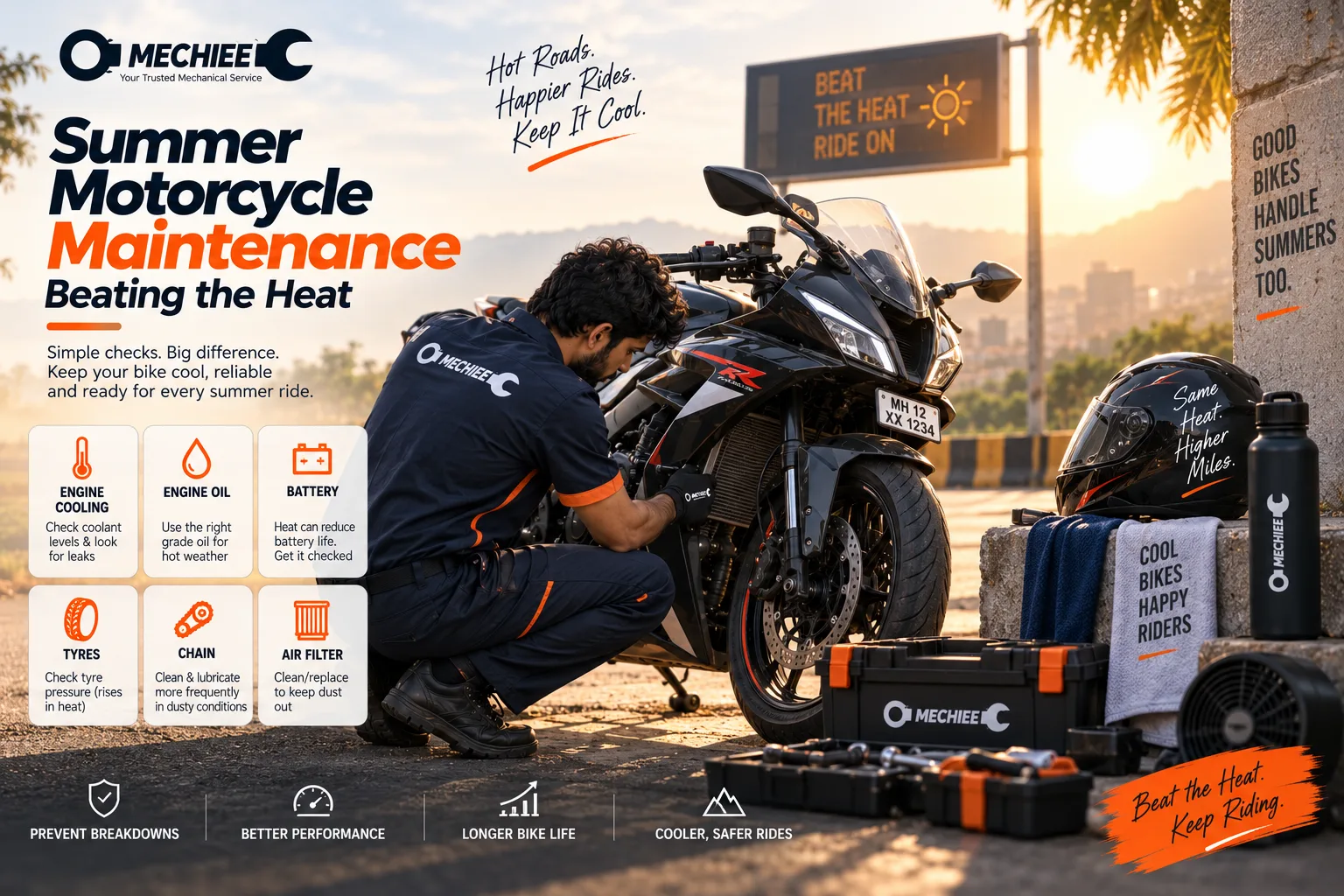
Certain breakdown types cluster around specific conditions. Monsoon commonly brings electrical faults from water ingress into connectors, and stalling from water reaching the air intake in flooded stretches. Peak summer more commonly brings overheating and battery failures, since both engine and battery health are stressed harder by sustained heat. Recognizing which season you're in helps narrow down the likely cause faster when something goes wrong.
Preventing Breakdowns Through Pattern Recognition
Many breakdowns aren't truly sudden — they're the final stage of a problem that's been showing smaller signs for days or weeks. A bike that's been slightly harder to start each morning, a chain that's needed re-tightening more often than usual, or a headlight that's been flickering intermittently are all patterns worth acting on before they escalate into a full roadside breakdown.
Staying Calm Matters More Than It Sounds
A breakdown, especially in unfamiliar surroundings or bad weather, understandably raises stress levels. Riders who stay calm and work through the situation methodically — safety first, then diagnosis, then a clear decision on fix-or-call — generally resolve the situation faster and more safely than those who react hastily, whether that's attempting a risky ride to "just get somewhere" or panicking over what often turns out to be a minor, fixable issue.
Learning From Every Breakdown
Once a breakdown is resolved, it's worth a few minutes of honest reflection — was there a warning sign in the days or weeks before that, in hindsight, should have prompted an earlier check? Most riders who go through a handful of breakdowns over the years get noticeably better at catching the early signs the next time, simply because they've learned what their specific bike's warning signals actually look like before something fails completely.
Frequently Asked Questions
What should I always carry to handle minor breakdowns myself?
A basic tool kit, tyre puncture repair kit with a compact inflator, spare fuses, and a charged phone cover the majority of common roadside situations.
Is it safe to keep riding a bike that's making a new, unusual noise?
Generally no, especially if the noise is loud, new, or accompanied by any change in how the bike feels. It's safer to stop and assess than to risk a noise developing into a bigger failure mid-ride.
How do I know if a breakdown needs a mechanic versus a tow?
If the bike can be safely started and ridden at low speed without further risk of damage, getting to a mechanic is usually fine. If there's a risk of further damage (running on a flat, an overheating engine, grinding brakes) or the bike simply won't move safely, a tow or doorstep mechanic visit is the safer call.
Doorstep Help When You Need It
Not every breakdown needs to mean waiting at a workshop. Mechiee's Emergency Breakdown Assistance and Garage Repair services bring help to wherever you are. See our emergency breakdown guide for step-by-step advice on what to do in the moment.
Is your bike due for service or inspection?
Don't wait for breakdown emergencies. Book an expert doorstep inspection or general service with Mechiee in under 60 seconds.

Comments
Log in to join the conversation→No comments yet — be the first to share your thoughts.