

Summer Motorcycle Maintenance: Beating the Heat
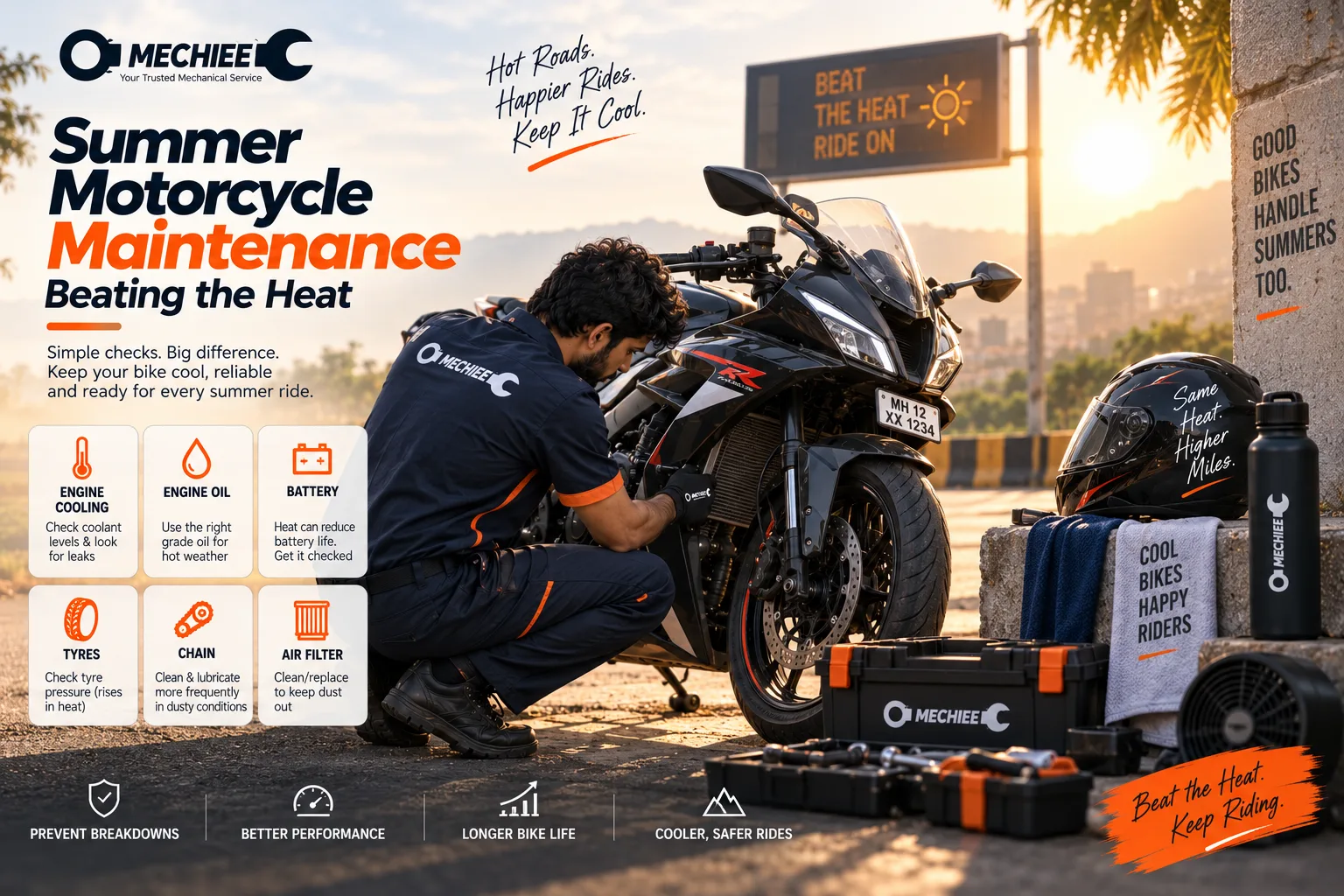
Summer doesn't cause dramatic, sudden failures the way monsoon flooding or a hard winter might elsewhere — but sustained high heat quietly stresses several systems on a motorcycle at once, and a few precautions go a long way toward avoiding a breakdown on the hottest day of the year.
Engine Oil Works Harder in Heat
Oil naturally thins as temperature rises, and sustained summer heat combined with stop-and-go traffic (where the engine idles and generates heat without the cooling benefit of steady airflow) puts extra strain on the oil's ability to maintain proper lubrication. If you're due for an oil change heading into peak summer, it's a good time to get it done rather than pushing to the outer edge of the interval.
Cooling System Checks (Liquid-Cooled Engines)
Check coolant level before long summer rides, and top up only with the correct coolant type — never plain water as a long-term substitute, since it lacks the corrosion protection and boiling point improvement proper coolant provides. If your bike runs noticeably hotter than usual or the fan seems to run constantly, have the cooling system checked rather than waiting for it to become a bigger problem.
Tyre Pressure and Heat
Tyre pressure rises as temperature increases — both from ambient heat and from the tyre heating up during a ride. Check and set pressure when tyres are cold, and avoid overinflating in anticipation of heat, since this can reduce your contact patch and grip. Also inspect for any sidewall cracking, since heat accelerates rubber aging.
Battery Health in Summer
Counterintuitively, batteries often fail more in summer than winter — sustained heat accelerates the internal chemical degradation that eventually kills a battery. If your bike has been slow to start or showing dimmer lights at idle, get it checked before peak summer rather than after it leaves you stranded.
Riding During Peak Heat Hours
- Stay hydrated — heat fatigue affects reaction time and judgment more than most riders realize.
- Wear breathable riding gear rather than skipping protective gear altogether to stay cool; mesh jackets offer both airflow and protection.
- Avoid parking in direct sun for extended periods where possible — it accelerates wear on rubber components (tyres, seals, wiring insulation) and heats fuel in the tank.
- If your bike has been parked in direct sun, let it cool slightly before a long, hard ride, especially if you notice the engine already running warmer than usual at startup.
Fuel System Considerations
Heat increases fuel evaporation, particularly noticeable if your bike sits parked in the sun for extended periods. Parking in shade where possible, and not overfilling the tank (which leaves less room for fuel expansion in heat), are simple habits that help.
Rider Comfort and Heat Fatigue
Heat affects the rider as much as the machine. Riding for extended periods in peak summer heat without adequate hydration leads to fatigue that dulls reaction time and judgment, sometimes before the rider consciously feels overheated. Carrying water on longer summer rides, taking shaded breaks, and wearing moisture-wicking base layers under protective gear all help manage this without sacrificing safety gear for comfort.
Effects of Heat on Plastic and Rubber Components
Beyond tyres, sustained heat exposure gradually affects other rubber and plastic parts — wiring insulation, seat foam, fairings, and grips can all become more brittle or discolored with prolonged sun exposure over multiple summers. Using a bike cover when parking for extended periods in direct sun is a simple, inexpensive way to slow this cumulative wear.
Heat's Effect on Braking Performance
Very hot ambient conditions, combined with heavy traffic braking, can bring brake components closer to their effective heat limits than in cooler weather, slightly increasing the risk of brake fade during sustained hard use. This is rarely an issue in normal city riding but becomes more relevant on hot-weather hill descents or extended hard braking sessions, where using engine braking to share the load makes a meaningful difference.
Adjusting Your Riding Schedule Around Peak Heat
Where your daily schedule allows some flexibility, shifting rides earlier in the morning or later in the evening during the hottest weeks of the year is easier on both you and the bike than consistently riding through peak afternoon heat. This isn't always practical for a fixed commute, but even small adjustments — leaving fifteen minutes earlier to beat the worst of the midday sun on a weekend errand — add up over a full summer.
Signs Summer Heat Has Already Taken a Toll
By the tail end of a long, hot summer, it's worth specifically checking for cumulative signs of heat stress rather than assuming everything is fine simply because nothing failed outright: sidewall cracking on tyres, a battery that's noticeably weaker than it was in spring, and rubber hoses or grips that have started to feel slightly stiffer or more brittle than before. Catching these signs at the end of summer, rather than waiting for them to cause a problem later, keeps small heat-related wear from compounding into bigger issues.
Frequently Asked Questions
Is it bad to ride during the hottest part of the day?
It's not inherently damaging to the bike if it's mechanically healthy, but it does increase strain on cooling, oil, and battery systems, and it's harder on the rider too. If you have flexibility, riding during cooler morning or evening hours is easier on both.
Why does my bike feel less powerful in extreme heat?
Hot air is less dense, which can slightly reduce engine performance, and a heat-soaked engine may also be running slightly richer or leaner than optimal depending on the fuel system. This is normal to a degree, but a significant, sudden power loss is worth checking.
Should I change my oil more often in summer?
If your riding is mostly heavy city traffic in high heat, slightly more frequent oil changes than the outer manufacturer interval can be a reasonable precaution, though your specific bike and oil type matter — a mechanic can advise based on your situation.
Get Ahead of Summer Problems
A pre-summer check covering oil, coolant, tyres, and battery catches most heat-related issues before they strand you. Mechiee's Engine Oil Change and Battery Replacement services help you head into the hot months prepared.
Is your bike due for service or inspection?
Don't wait for breakdown emergencies. Book an expert doorstep inspection or general service with Mechiee in under 60 seconds.

Comments
Log in to join the conversation→No comments yet — be the first to share your thoughts.