

Understanding Motorcycle Suspension: Maintenance & Warning Signs
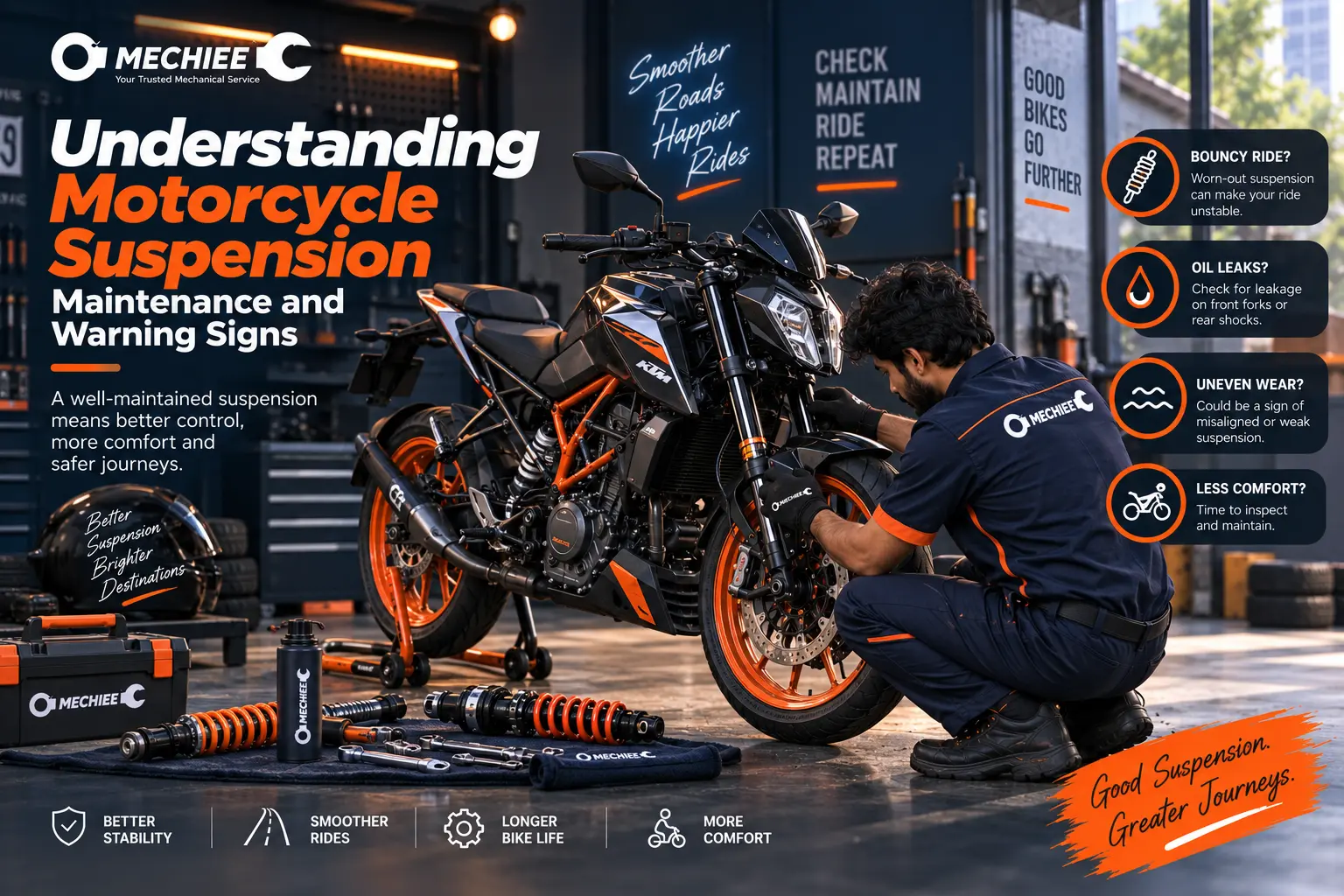
Suspension doesn't get nearly as much attention as brakes or the engine, but it plays a surprisingly large role in both comfort and safety — it keeps your tyres in consistent contact with the road over bumps, which directly affects how well your brakes and tyres can actually do their job.
What Suspension Actually Does
Front forks and rear shocks absorb bumps and irregularities in the road surface, keeping the wheels tracking the ground rather than bouncing off it. On India's roads — potholes, speed breakers, uneven patches — suspension works considerably harder than it would on smoother, more consistent road surfaces, which is part of why it wears faster here than manufacturer estimates based elsewhere might suggest.
Common Warning Signs
- Oil leaking from the fork seals — visible as a wet film or streak down the fork tube. This means the seal has failed and the fork is losing its damping oil, which affects control.
- Excessive bouncing after a bump — instead of settling quickly, the bike continues to bounce for a second or more, indicating worn damping.
- A harsh, jarring ride over small bumps — can indicate suspension that's become too stiff, sometimes from old, degraded oil inside the forks.
- Uneven front-end dive under braking — one fork compressing noticeably more than the other can indicate uneven wear or a leak on one side.
Why Potholes Are Particularly Hard on Suspension
A sharp-edged pothole hit at speed delivers a much harsher impact than a gradual bump, and repeated hard hits accelerate wear on fork seals, bushings, and shock internals. Where possible, slowing down for visible potholes rather than absorbing them at speed protects both your suspension and your wheels.
Rear Shock Preload and Load
Many rear shocks have adjustable preload, letting you compensate for carrying a pillion or luggage. Riding heavily loaded without adjusting preload can cause the suspension to sit too low in its travel, reducing the bump absorption available before it bottoms out. If you regularly ride two-up or with luggage, it's worth having preload set appropriately.
How Often Should Suspension Be Checked?
A visual check for leaks and a feel-test (pressing down on the front end and rear to check how it rebounds) can be done at home periodically. A proper inspection, including checking for internal wear that isn't visible externally, is best done as part of your regular service — especially if you've noticed any of the warning signs above.
Front Fork vs Rear Shock: Different Wear Patterns
Front forks handle braking dive and steering feedback, and their seals are directly exposed to road spray and dust, which is why fork seal leaks are among the more common suspension issues riders encounter. Rear shocks, often enclosed or partially shielded by bodywork, tend to show wear differently — more commonly through a gradual loss of damping quality (a bouncier, less controlled rear end) rather than visible external leaks, making them slightly easier to overlook until the difference in ride quality becomes obvious.
How Riding Surface Shapes Suspension Wear
Consistent exposure to rough, broken road surfaces — common on many Indian routes, including otherwise well-used city roads — accelerates suspension wear compared to smoother, better-maintained surfaces. This isn't a reason to avoid necessary routes, but it does mean riders who regularly cover rough patches should treat suspension checks as a more frequent priority than the general population of riders elsewhere might need to.
The Connection Between Suspension and Tyre Wear
Worn suspension that no longer damps effectively can cause a tyre to lose consistent contact with the road over bumps, leading to irregular, sometimes cupped wear patterns on the tyre that aren't caused by the tyre itself. If you're seeing unusual tyre wear and have already ruled out pressure and alignment issues, worn suspension components are worth considering as the underlying cause.
Why Suspension Feels Subjective, But Wear Isn't
Riders often describe suspension issues in vague, subjective terms — "feels off," "harsher than before" — which makes it easy to second-guess whether something's genuinely wrong or if it's just a different road surface. The objective checks (looking for oil residue on fork tubes, testing rebound by pressing down firmly and observing how the bike returns to position) are more reliable than the subjective "feel" alone, and are worth doing periodically rather than relying purely on impression.
Suspension Servicing Versus Replacement
Not every suspension issue requires full replacement. Fork oil and seals can often be serviced — old oil drained and replaced, worn seals swapped out — restoring much of the original damping performance at a lower cost than replacing the entire fork assembly or shock unit. This is worth discussing with a mechanic before assuming a suspension problem automatically means an expensive full replacement.
How Pillion Riding Changes What to Watch For
If you regularly ride two-up, the added weight means your suspension is working closer to the upper end of its intended range more often, which can make wear symptoms appear somewhat sooner than for a rider who almost always rides solo. Being a little more attentive to the warning signs above, and adjusting preload appropriately for the extra weight, helps offset this added demand.
Frequently Asked Questions
Is it normal for suspension to feel different after 20,000+ km?
Some gradual change in feel is expected as damping oil and seals age, but a noticeable change — bouncier, harsher, or leaking — is worth having checked rather than assumed to be normal wear.
Can I ride with a leaking fork seal?
It's not advisable for long. A leaking seal means reduced damping oil, which compromises control, and the leaking oil can also contaminate your front brake pads if it reaches the disc, affecting braking performance too.
Does suspension affect fuel efficiency?
Indirectly. Worn suspension that doesn't keep tyres consistently planted can affect rolling resistance and how smoothly power is delivered to the road, though the effect is smaller than something like tyre pressure or a dragging brake.
Have It Checked Properly
Suspension problems are often subtle until they're not. Mechiee's Suspension Check service inspects forks, shocks, and seals at your doorstep, catching leaks and wear before they affect your ride quality or safety.
Is your bike due for service or inspection?
Don't wait for breakdown emergencies. Book an expert doorstep inspection or general service with Mechiee in under 60 seconds.

Comments
Log in to join the conversation→No comments yet — be the first to share your thoughts.