

Chain Maintenance Guide: Cleaning, Lubrication & Adjustment
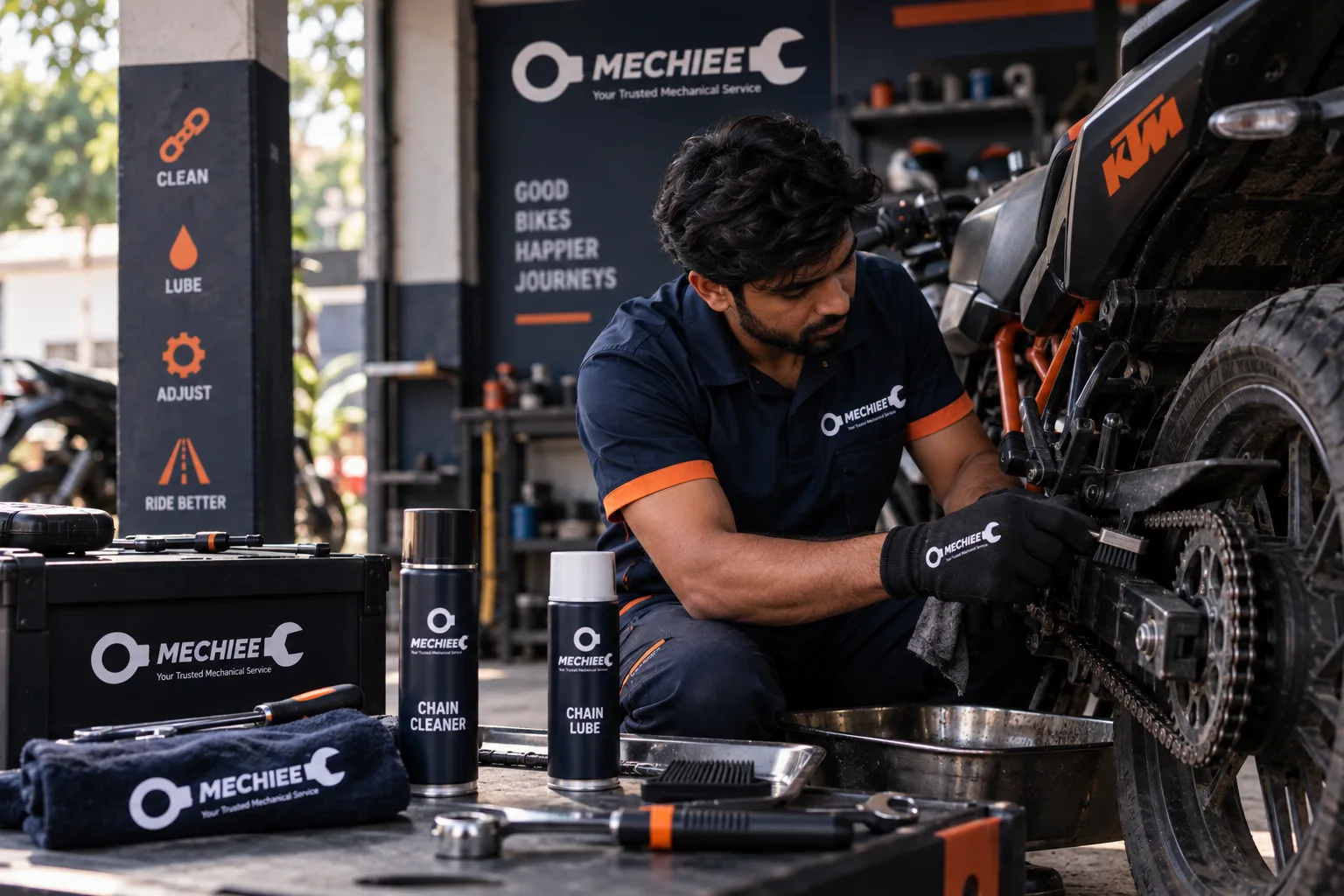
The drive chain is one of the few parts on a motorcycle that's fully exposed to road grime, water, and dust — and it's also one of the cheapest parts to maintain properly and one of the more expensive parts to replace if neglected, especially since a badly worn chain often takes the front and rear sprockets down with it.
Why Chain Maintenance Matters More Than It Seems
A dry, dirty, or loose chain doesn't fail quietly. It wears the sprocket teeth into a hooked shape, increases stress on the gearbox output shaft, and in poorly maintained cases, can even snap or derail while riding — a real safety concern, not just a maintenance inconvenience.
Cleaning the Chain
Use a dedicated chain cleaner or kerosene applied with a brush — never a high-pressure water jet directly at the chain, since it can force water past the O-rings or X-rings that seal in the factory grease on modern chains. Wipe away loosened grime with a clean cloth, working the chain through several rotations by hand or by slowly rolling the bike forward.
Lubricating the Chain
- Lubricate after cleaning, never over a dirty chain — you'll just be sealing grit against the metal.
- Apply lubricant to the inner side of the chain (facing the sprockets), where it can work its way into the rollers and pins as the chain moves, rather than spraying the visible outer face.
- Let it sit for a few minutes before riding so it doesn't fling off onto your wheel or swingarm.
- Re-lubricate more frequently during monsoon — water washes lubricant off far faster than dry conditions.
Checking and Adjusting Chain Slack
Most manufacturers specify an ideal slack range (commonly around 20-30mm of up-down movement at the tightest point, though this varies by model — check your manual). Check with the bike on its side stand, pressing the chain up and down at the midpoint between the sprockets.
- Too loose: increases wear, can slap against the swingarm, and in extreme cases can derail.
- Too tight: puts excess strain on the gearbox output shaft and wheel bearings, and wears out faster since it can't flex naturally as the swingarm moves.
Adjustment involves loosening the rear axle nut and turning the chain adjusters evenly on both sides, then checking wheel alignment markers before re-tightening. If you're not confident doing this yourself, it's a quick job for a trained mechanic and worth getting right, since uneven adjustment throws off wheel alignment.
When to Replace the Chain and Sprockets
Look for stiff links that don't flex smoothly, visible rust that lubrication doesn't remove, or sprocket teeth that look hooked or unevenly worn rather than uniformly triangular. Chains and sprockets are usually replaced as a set — mixing a new chain with old, worn sprockets accelerates wear on the new chain.
O-Ring and X-Ring Chains vs Standard Chains
Most modern motorcycles use O-ring or X-ring chains, which have small rubber seals between the link plates that trap factory grease inside the chain's pins and bushings — this is why aggressive pressure washing can damage them, by forcing water past those seals. Standard (non-sealed) chains, more common on older or very basic commuter bikes, rely entirely on external lubrication and need more frequent attention since they have no internal grease reserve to protect.
How Riding Style Affects Chain Wear
Aggressive, hard acceleration — snapping the throttle open rather than rolling it on smoothly — puts sudden peak loads on the chain that accelerate wear more than the same average power delivered smoothly. Similarly, riding with a chain that's been left too loose for an extended period causes uneven, "whipping" stress every time slack is taken up under acceleration, which wears both the chain and the sprocket teeth faster than a properly adjusted chain under the same riding style.
Common Mistakes When Maintaining a Chain at Home
- Spraying lubricant onto a chain that's still dirty, which just seals grit against the moving parts instead of protecting them
- Over-tightening in an attempt to "be safe," which actually increases wear and stresses the gearbox output shaft
- Using engine oil or an unsuitable lubricant that flings off quickly under spinning force instead of a proper chain-specific lubricant
- Forgetting to check both adjuster marks are equal on each side, which throws off wheel alignment even if the slack itself looks correct
Chain Maintenance as Part of a Bigger Picture
A well-maintained chain doesn't just last longer on its own — it protects the sprockets, reduces strain on the gearbox output shaft, and even contributes slightly to smoother power delivery and marginally better fuel efficiency compared to a dry, gritty chain fighting friction on every rotation. It's a small, inexpensive habit with a disproportionately large payoff across several other systems on the bike.
Chain Maintenance Kits Worth Keeping at Home
A basic setup — a dedicated chain cleaner brush, a bottle of proper chain lubricant, and a simple ruler or the manufacturer-specified tool for checking slack — costs relatively little and covers the vast majority of home chain maintenance needs. Keeping these on hand, rather than buying them only when you remember the chain needs attention, makes it far more likely the maintenance actually happens on a consistent schedule rather than being postponed for lack of supplies.
Frequently Asked Questions
How often should I clean and lubricate my chain?
Roughly every 500-600 km in normal conditions, and more often if you've ridden through rain or dusty, unpaved roads, since both wash away lubrication quickly.
Can I use any lubricant, like engine oil, on my chain?
It's better to use a dedicated chain lubricant. Chain lubes are formulated to cling to the chain under spinning and centrifugal force, while engine oil tends to fling off quickly and offers less protection.
Why does my chain make a clicking noise even after lubrication?
A persistent clicking sound even after proper cleaning and lubrication often points to a stiff link or early sprocket wear rather than a dirt problem, and is worth having inspected.
Let a Professional Handle the Adjustment
Chain slack and alignment are easy to get slightly wrong by eye, and small errors compound over time. Mechiee's Chain Cleaning & Lubrication service handles cleaning, lubrication, and proper slack adjustment at your doorstep — pair it with a periodic Wheel Alignment check if you've recently adjusted your chain.
Is your bike due for service or inspection?
Don't wait for breakdown emergencies. Book an expert doorstep inspection or general service with Mechiee in under 60 seconds.

Comments
Log in to join the conversation→No comments yet — be the first to share your thoughts.